Simplest Website || Full Content || Point To Point
All About Tea (Camellia sinensis): The Legendary Miracle Drink of Life, Energy, Healing & Global Culture – Complete Powerful Guide
Introduction & Powerful History
Tea (Camellia sinensis) is one of the most powerful, legendary, refreshing, life-enhancing and globally dominant beverages ever discovered by humanity. It is not just a drink, but a transformational cultural force that has shaped civilizations, economies, and daily human lifestyle for centuries.
Historically, tea originated in ancient China and Southeast Asia, and later spread across the world through trade, exploration, and colonial expansion.
In India, tea was introduced and commercialized during the 17th century by the British East India Company, which recognized the country’s fertile land, rich soil, and ideal climate for large-scale tea cultivation. This marked a major turning point in agricultural history, as tea plantations rapidly expanded across India.
By the early 20th century (around 1907), Indian tea gained worldwide recognition for its exceptional quality, strong aroma, rich flavor, and premium value, making it one of the most demanded beverages globally.
Today, tea is considered a universal, unstoppable, deeply emotional, and comforting drink consumed by billions every day.
Sources of Tea (Plant Parts Used)
Tea is derived from the young and tender parts of the plant:
🌿 Fresh young leaves
🌱 Tea buds (tender shoots)
🌳 Soft apical leaves
These parts contain:
Caffeine (energy & alertness)
Antioxidants (health protection)
Tannins (taste & bitterness)
Natural essential compounds (aroma & flavor)
These elements make tea a powerful, energizing, detoxifying, and mood-enhancing beverage.
How Tea is Made (Complete Processing Steps)
Tea manufacturing is a carefully controlled scientific and traditional process:
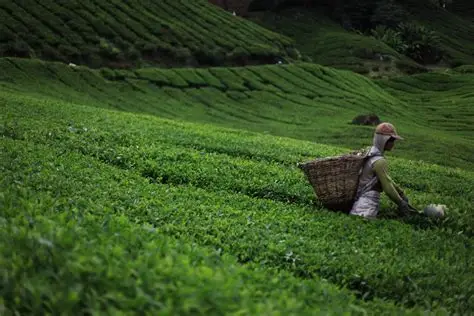
1. Plucking: -Only the finest young leaves and buds are hand-picked to ensure high quality.
2. Withering: -Leaves are spread to reduce moisture, making them soft and flexible.
3. Rolling:- Leaves are gently rolled to break cell walls and release natural juices.
4. Oxidation (Fermentation):- Leaves react with oxygen, developing color, strong aroma, and deep flavor.
5. Drying (Firing):- Heat is applied to stop oxidation and preserve the final quality.
6. Sorting & Packaging:- Tea is graded based on quality and then packed for global distribution.
Major Types of Tea
Black Tea – strong, bold, widely consumed
Green Tea – light, healthy, antioxidant-rich
White Tea – delicate and premium
Oolong Tea – semi-oxidized balanced flavor
Negative Side / Limitations (Balanced View)
Although tea has many benefits, excessive consumption can lead to:
Naturally, it is a 9–15 meter tall evergreen shrub/tree
It is slightly hairy (almporomil)
For cultivation, it is regularly pruned
After pruning, it remains about 60–150 cm in height
Pruning helps in better leaf production for tea
🌱 Stem
Stem is woody, branched, and evergreen
In wild conditions, it grows like a small tree
In plantations, it is maintained as a bushy plant
Stem supports leaves, buds, and flowers
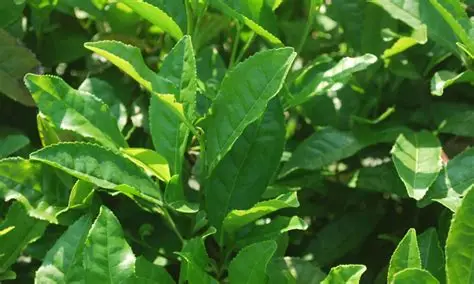
🍃 Leaves
Leaves are simple and alternate
Length: 5–15 cm
Width: 3.87–6.2 cm
Shape: pointed (lance-shaped apex)
Upper surface: smooth and shiny
Lower surface: slightly hairy
Contains tiny oil glands giving aroma
Young leaves are mainly used for tea production
🌱 Buds
Buds are soft, tender, and highly nutritious
They are present at the tip of shoots
Best quality tea is made using “two leaves and a bud”
Rich in flavor and active compounds
🌸 Flower
Flowers are white and fragrant
Occur singly or in groups of 2–4
Diameter: about 3.2 cm
Sepals: 5–6, rounded
Flowers are attractive and mildly scented
🍈 Fruit
Fruit is triangular in shape
Diameter: about 1.8 cm
Hard fruit coat
Contains 2 shiny seeds
Seeds are light brown in color
⏳ Flowering & Fruiting Season
Flowering: December to March
Fruiting: December to March
Ayurvedic Properties, Actions & Effects of Tea
🌿 Tea (Camellia sinensis) has powerful Ayurvedic properties such as astringent (kashaya), hot potency (ushna), light (laghu), and sharp (tikshna) qualities. It is a dynamic, energizing, and revitalizing natural beverage that helps in balancing Kapha and Pitta doshas, while it may slightly increase Vata. It is heart-friendly (hṛdya), digestive-stimulating (deepana), metabolism-enhancing (pachana), and appetite-boosting (kshudhavardhaka). It also shows grahi (absorbent), mild stimulant, sweat-inducing (swedakaraka), sleep-reducing (nidranashaka), and diuretic (mutrala) actions, giving a positive and powerful impact on energy, alertness, and digestion, though excessive use may lead to negative effects like restlessness or imbalance.
🍃 Tea also shows important medicinal and scientific effects. It is useful in conditions like headache (ardhavabhedaka), heart pain (hridaya shoola), eye problems, bleeding disorders (rakta arsha), mental stress, inflammation (shotha), excessive thirst (trishna), and respiratory issues (shwasa). Research shows tea has strong anti-inflammatory, detoxifying, and protective properties, along with powerful anthelmintic (anti-parasitic) activity. Tea extracts also show positive anxiolytic (anti-anxiety), antidepressant, and anti-hyperglycemic effects, making it a life-supporting and health-enhancing natural drink, but overuse may cause negative effects like sleep disturbance and overstimulation.
🧠 Headache: Tea leaf infusion (fanta), 5–15 ml taken orally, helps in relieving headache and provides a calming and pain-reducing effect on the head.
👁️ Eye Disorders: Tea leaf infusion, 1–2 drops in the eyes, helps in relieving eye infection (conjunctivitis) within 2–3 days and gives a soothing, cooling effect.
🗣️ Throat Problems: Gargling with tea decoction 2–3 times daily helps in healing throat irritation or injury and provides a soothing effect on the throat.
🫁Respiratory Disorders: A decoction made with Haritaki, Bibhitaki, Amla, Revandchini, and tea leaves (15–20 ml) helps in relieving cough and breathing problems, and supports respiratory health.
🫃Abdominal Disorders: Tea decoction mixed with mint and ajwain seeds, taken in 15–20 ml dose, helps relieve abdominal pain caused by gas and provides a relaxing effect on the digestive system.
🧴 Urinary Disorders: Tea leaf infusion, taken in 10–15 ml dose, helps in improving urinary problems and supports normal urinary function.
❤️ Reproductive Health: Tea mixed with sugar candy, cinnamon, and milk, prepared and taken in 15–20 ml dose, is believed to help in enhancing vitality and improving reproductive strength.
🧑🦰 Skin Burns & Injuries: Cooled tea decoction is used as a natural external application. Cloth soaked in it is placed on burned areas and applied repeatedly, helping to reduce blisters, prevent skin damage, and promote healing.
🔥 Fever & Body Weakness: Tea leaf infusion (fanta) taken orally helps in reducing fever and relieves muscle weakness and fatigue, providing a mild strengthening and energizing effect.
💧 Swelling (Inflammation): Crushed tea leaves warmed slightly and applied on swollen areas help reduce inflammation and give a calming anti-swelling effect.
🩺 Lumps & Swelling Conditions: Paste made from boiled tea leaves, when applied externally, helps in reducing lumps and inflammatory swelling, supporting local healing.
Ayuage is a trusted platform dedicated to sharing practical, easy-to-understand, and reliable insights on health, nutrition, wellness, and healthy living. Our goal is to simplify important health topics and provide readers with helpful information that supports smarter food choices and a balanced lifestyle.