Adam’s Apple | Tabernaemontana divaricata | Crepe Jasmine | Moonbeam | चांदनी / तगर | Chandni / Tagar– 15 Amazing Facts, Uses, Benefits & Medicinal Properties
Introduction
Tabernaemontana divaricata, commonly known as Crepe Jasmine, Moonbeam, Chandni, or Tagar, is an attractive and valuable evergreen shrub belonging to the Apocynaceae family. It is native to South and Southeast Asia and is widely cultivated in countries such as India, Bangladesh, Sri Lanka, Myanmar, Thailand, Malaysia, Indonesia, and the Philippines. Because of its elegant appearance, lush green foliage, and beautiful white flowers, it is commonly planted in gardens, parks, temples, and around homes. It is also cultivated as an ornamental plant in many other tropical and subtropical regions of the world.
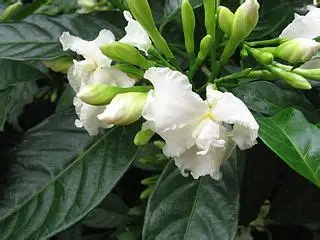
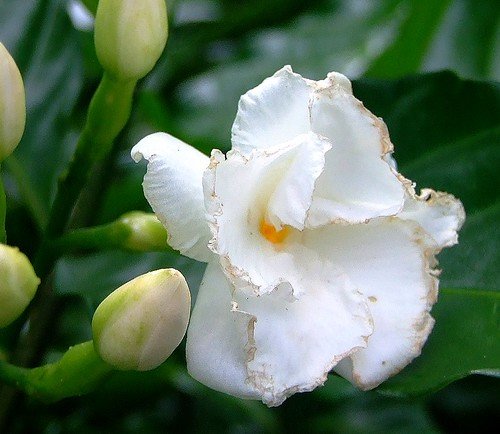
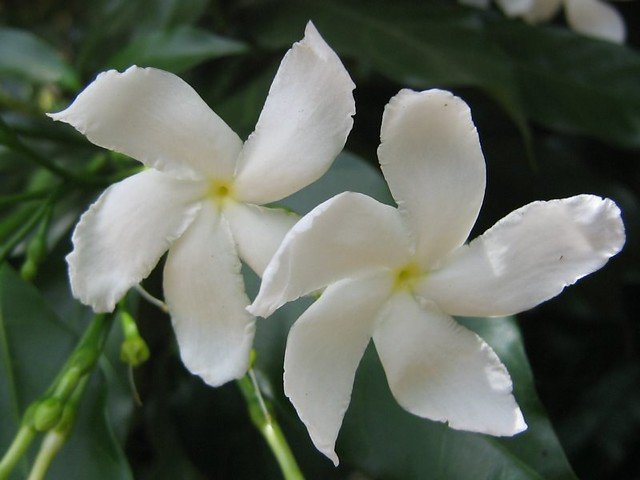
The fragrant and distinctive white flowers are one of the most appealing features of this plant. Its flowers are mainly found in two forms—one type has five simple petals, while the other has five petals arranged in two rows, giving the bloom a fuller and more impressive appearance. Beyond its ornamental beauty, Tabernaemontana divaricata has attracted considerable interest for its traditional medicinal uses and various plant compounds. This combination of striking beauty, traditional value, and potential therapeutic properties makes Chandni an important plant to explore.
Discovery of Tabernaemontana divaricata
- Tabernaemontana divaricata has been studied by botanists and researchers for many years because of its distinctive flowers, traditional medicinal importance, and rich chemical composition. Early botanical work established its classification within the Apocynaceae family, while later researchers focused more on its medicinally important compounds.
- In 1984, T. A. Van Beek, R. Verpoorte, and N. G. Bisset reviewed the chemistry and traditional uses of the Tabernaemontana genus, highlighting its diverse indole alkaloids. Later, Toh-Seok Kam and S. Anuradha studied the leaves of T. divaricata and reported alkaloids including mehranine and conofoline. Further research by Pratchayasakul and colleagues examined its traditional uses and reported several promising pharmacological activities in experimental studies.
- Overall, scientific research has shown that Chandni contains a wide range of bioactive plant compounds, making it an interesting subject for phytochemical and pharmacological research. However, most findings are based on laboratory or experimental studies, and further research is needed to establish its medicinal benefits in humans.
Powerful History of Tabernaemontana divaricataS
- Tabernaemontana divaricata has a long history of cultivation and traditional use in South and Southeast Asia. The plant is believed to have originated in this region and has been closely associated with India and other tropical Asian countries for generations. Its attractive white flowers made it a popular choice for gardens, homes, temples, and other landscaped places.
- In India, Chandni has traditionally been appreciated not only for its elegant appearance and pleasant fragrance but also for its use in traditional herbal practices. Different parts of the plant, including the leaves, flowers, roots, and bark, have been used in various traditional preparations. Over generations, this knowledge contributed to the plant’s importance in local herbal traditions.
- As its popularity increased, the plant was introduced and cultivated in several tropical and subtropical regions around the world. Today, it can be found growing as an ornamental shrub in many warm-climate regions. Its widespread cultivation, distinctive flowers, and traditional importance have also encouraged scientists to study its chemical compounds and potential medicinal properties.
Tabernaemontana divaricata in your language
| Name / Term | Language / Country | Local Name |
|---|---|---|
| Crepe Jasmine in English | English (Worldwide) | Crepe Jasmine, Crape Jasmine, Pinwheel Flower, East Indian Rosebay, Moonbeam |
| Crepe Jasmine in Hindi | Hindi (India) | चांदनी (Chandni), तगर (Tagar), पिण्डपुष्प (Pindpushp) |
| Crepe Jasmine in Sanskrit | Sanskrit (India) | नन्द्यावर्त (Nandyavarta), तगर (Tagara), सितपुष्प (Sitapushpa) |
| Crepe Jasmine in Bengali | Bengali (India/Bangladesh) | টগর (Tagar), জংলি টগর (Jongli Tagar), কাঠ মালতি (Kath Malati) |
| Crepe Jasmine in Assamese | Assamese (India) | আই ফুল (Aai Phul), কাঠ মালতী (Kath Malati) |
| Crepe Jasmine in Gujarati | Gujarati (India) | સાગર (Sagar), તગર (Tagar) |
| Crepe Jasmine in Marathi | Marathi (India) | अनंत (Ananta), तगर (Tagara) |
| Crepe Jasmine in Kannada | Kannada (India) | ನಂದಿಬಟ್ಟಲು (Nandibattalu), ನಂದ್ಯಾವರ್ತ (Nandyavarta) |
| Crepe Jasmine in Tamil | Tamil (India/Sri Lanka) | நந்தியார்வட்டை (Nandiarvattai) |
| Crepe Jasmine in Telugu | Telugu (India) | నందివర్ధనము (Nandivardhanamu), గ్రంధితగరపు (Grandhitagarapu) |
| Crepe Jasmine in Malayalam | Malayalam (India) | നന്ത്യാർവട്ടം (Nandyaarvattam), തഗരം (Thagaram) |
| Crepe Jasmine in Odia | Odia (India) | ପିଣ୍ଡପୁଷ୍ପ (Pindapushpa), ଟଗର (Tagara) |
| Crepe Jasmine in Konkani | Konkani (India) | अनंत (Ananta), तगर (Tagara) |
| Crepe Jasmine in Nepali | Nepali (Nepal/India) | चाँदनी (Chaandani), कागते फूल (Kaagate Phool) |
| Crepe Jasmine in Urdu | Urdu (India/Pakistan) | چاندنی (Chandni), تگر (Tagar) |
| Crepe Jasmine in Dogri | Dogri (India) | चानन फुल्ल (Chaanan Phul), दुद्ध चाननी (Duddh Chaananee) |
| Crepe Jasmine in Sinhala | Sinhala (Sri Lanka) | වතු සුද්ද (Wathu Sudda) |
| Crepe Jasmine in Chinese | Chinese (China) | 狗牙花 (Gǒu Yá Huā), 山马茶 (Shān Mǎ Chá) |
| Crepe Jasmine in Thai | Thai (Thailand) | พุดจีบ (Phut Chip), พุดสวน (Phut Suan) |
| Crepe Jasmine in Vietnamese | Vietnamese (Vietnam) | Ngọc bút, Bánh hỏi |
| Crepe Jasmine in Indonesian | Indonesian (Indonesia) | Mondokaki, Bunga Manila, Bunga Nyingin |
| Crepe Jasmine in Malay | Malay (Malaysia) | Susun Kelapa, Bunga Susu, Susok Ayam |
| Crepe Jasmine in Tagalog | Tagalog (Philippines) | Pandakaking-tsina |
| Crepe Jasmine in Japanese | Japanese (Japan) | インドソケイ (Indo-sokei), サンユウカ (San’yūka) |
| Crepe Jasmine in Spanish | Spanish (Spain/Latin America) | Jazmín doble, Rosa de hielo |
| Crepe Jasmine in Swedish | Swedish (Sweden) | Fjärilsgardenia |
| Term | Information |
|---|---|
| Botanical Name | Tabernaemontana divaricata (L.) R.Br. ex Roem. & Schult. |
| Family | Apocynaceae |
| Genus | Tabernaemontana |
| Species | divaricata |
| Plant Type | Evergreen shrub / small tree |
| Native Region | Himalaya to China and Indo-China |
| Common English Name | Crepe Jasmine / Crape Jasmine |
| Other English Names | Pinwheel Flower, East Indian Rosebay, Moonbeam |
| Hindi Name | Chandni / Tagar |
| Sanskrit Name | Nandyavarta / Tagara |
Physical Appearance of Tabernaemontana divaricata
🌱 Habit
Tabernaemontana divaricata is an evergreen, smooth shrub that generally grows up to about 2.5 m in height. The plant is well-branched and produces milky latex when its tissues are damaged.
🌿 Stem
The stems are smooth, glossy and greyish in colour. They are highly dichotomously branched and contain milky latex. Young branches are generally greenish and become greyish as they mature.
🌱 Root
The plant develops a well-established root system that anchors it firmly in the soil and supports the uptake of water and nutrients required for growth.
🍃 Leaves
The leaves are simple and arranged oppositely along the branches. They are leathery, smooth and glossy, measuring approximately 7.6–15.2 cm in length and 2.5–3.8 cm in width. The upper surface is bright green, smooth and shiny.
🌸 Inflorescence
The flowers are generally produced in small clusters, forming compact inflorescences near the ends of the branches. The clusters give the plant a distinctive ornamental appearance.
🌼 Flowers
The flowers are white, attractive and pleasantly fragrant. They have a characteristic pinwheel-like appearance, with the petals twisted or overlapping in a graceful spiral arrangement.
🥀 Calyx
The calyx consists of small green sepals that surround and protect the developing flower bud. The sepals remain attached to the flower during development.
🌸 Corolla
The corolla is white and consists of five petals fused at the base. The petals are twisted and spread outward, producing the characteristic pinwheel-shaped appearance of the flowers.
🌿 Stamens
The flowers contain five stamens positioned inside the corolla tube. The stamens form part of the reproductive structure of the flower and produce pollen.
🌸 Pistil
The pistil consists of the ovary, style and stigma. It forms the female reproductive structure of the flower and develops into the fruit after successful fertilization.
🍈 Fruit
The fruits are paired, beaked and cylindrical, measuring approximately 2.5–7.6 cm in length and about 1 cm in width. They develop after flowering and contain the seeds within.
🌰 Seeds
The seeds are enclosed within the developing fruit and serve as the reproductive units of the plant. They enable the plant to reproduce and establish new individuals.
Ayurvedic Properties of Tabernaemontana divaricata
- Root: The root of Tabernaemontana divaricata is described in Ayurvedic literature as pungent and bitter in taste, light in nature, and warming in effect. It is traditionally associated with astringent, antipyretic and anthelmintic properties and has been used traditionally in conditions involving fever, urinary difficulty and paralysis.
- Latex: The milky latex (exudate) of the plant is traditionally described as having anti-inflammatory, cooling and suppurative-resolving properties. It has been associated with soothing effects and traditional applications for inflammatory conditions.
- Flowers: An ethanolic extract of the flowers has demonstrated antioxidant and anti-inflammatory activity in animal models of acute inflammation induced by carrageenan and chronic inflammation induced by formalin. These findings highlight the plant’s promising protective and inflammation-modulating potential.
- Leaves – Experimental Studies: A crude ethanolic extract of the leaves has demonstrated anti-convulsant activity in experimental studies, suggesting a potential neuroprotective effect that warrants further investigation.
- Leaves: A decoction prepared from the leaves is traditionally regarded as diuretic, supporting urinary elimination. The leaves have also demonstrated notable biological activities in experimental studies.
- Stem: Aqueous and alcoholic extracts prepared from the stem have demonstrated anti-inflammatory activity in experimental research, indicating potentially valuable pharmacological properties.
- General Pharmacological Activities: Tabernaemontana divaricata has been investigated for several biological activities, including analgesic, hypotensive, anti-infective, anti-inflammatory and cytotoxic effects. These findings are primarily based on experimental research and should not be interpreted as established clinical treatments.
- Antifertility Activity: Ethanolic leaf extract has also demonstrated antifertility activity in experimental animal studies. This evidence is preliminary and should not be considered proof of effectiveness or safety in humans.
Medicinal Uses of Tabernaemontana divaricata
🧠 Head Disorders
1. Headache: The milky latex obtained from the plant is mixed with oil and applied over the forehead. This traditional application is used to help relieve headache and eye pain.
👁️ Eye Disorders
1. Eye Disorders: The flowers and flower buds are ground into a paste and applied externally around the eyes. This traditional application is used for eye pain, inflammation and redness.
2. Eye Disorders: The root paste is mixed with fresh lemon juice and applied externally around the eyes. It is traditionally used for various eye disorders.
3. Eye Disorders: The milky latex obtained from the leaves is applied externally around the eyes and is traditionally used in eye disorders.
4. Eye Pain: The root is boiled in neem juice, and the resulting preparation is traditionally used as an anjana (collyrium) in the eyes to help relieve eye pain.
🦷 Oral Disorders
1. Toothache: The root of Tabernaemontana divaricata is chewed traditionally to help relieve toothache and dental pain.
2. Dental Disorders: Root powder is rubbed over the teeth as a tooth-cleaning preparation. It is traditionally used for dental caries, dental worms and pyorrhoea (pus discharge from the gums).
❤️ Heart & Blood Pressure Disorders
1. High Blood Pressure: A decoction prepared from the leaves is traditionally consumed to help manage high blood pressure.
🦠 Abdominal Disorders
1. Intestinal Worms: The root bark is ground into a paste and taken internally in a dose of 1–2 g. It is traditionally used to help eliminate intestinal worms.
2. Diarrhoea: 5 mL of fresh leaf juice is taken orally. This traditional preparation is used to help control diarrhoea.
🩹 Skin Disorders
1. Wounds: The milky latex obtained from the plant is mixed with crushed leaves and applied as a paste over wounds. This traditional application is used to support wound healing.
2. Skin Disorders: Fresh flower juice is applied externally to the affected skin. It is traditionally used to help relieve burning sensation, pain, inflammation and ringworm (dadru).
Frequently Asked Questions (FAQs)
1. What is Tabernaemontana divaricata?
2. What are the Ayurvedic uses of Tabernaemontana divaricata?
- Tabernaemontana divaricata is an evergreen ornamental shrub commonly known as Crape Jasmine, Crepe Jasmine, Chandni, or Pinwheel Flower. It belongs to the Apocynaceae family and is recognized for its glossy green leaves and fragrant white flowers
- In traditional Ayurvedic practice, different parts of the plant have been used for conditions such as headache, fever, toothache, skin disorders, wounds, diarrhoea, urinary complaints and inflammation. These are traditional uses and should not automatically be considered clinically proven treatments.
3. Which parts of Tabernaemontana divaricata are used medicinally?
4. Is Tabernaemontana divaricata used for toothache?
- The root, root bark, leaves, flowers, stem and latex have been described in traditional medicine. The particular plant part used varies according to the preparation and intended traditional application
- Yes. The root has traditionally been chewed or applied locally for the relief of toothache and dental pain.
5. Is Tabernaemontana divaricata used for headaches?
6. What are the medicinal benefits of Tabernaemontana divaricata leaves?
- Traditionally, preparations from the root and other plant parts have been used for headache. Experimental research has also investigated the plant’s analgesic and pain-relieving potential
- The leaves have been traditionally used in preparations for skin complaints, wounds, respiratory problems and urinary-related conditions. Experimental studies have also investigated leaf extracts for anti-inflammatory, antitussive and anti-asthmatic activities.
7. What are the benefits of Tabernaemontana divaricata flowers?
8. Does Tabernaemontana divaricata have anti-inflammatory properties?
- The fragrant flowers have traditional applications for pain and certain eye complaints. Scientific studies have also investigated flower extracts for antioxidant, anti-inflammatory and analgesic activity.
- Research has reported anti-inflammatory activity from different extracts and plant parts, including flowers and stems. However, much of the evidence comes from laboratory or animal studies rather than established human clinical trials.
9. What chemical compounds are found in Tabernaemontana divaricata?
10. Is Tabernaemontana divaricata safe to use?
- The plant contains several indole alkaloids, including coronaridine, tabernaemontanine, voacangine and other related compounds. Studies have reported a large diversity of alkaloids along with flavonoids, phenolic compounds, triterpenoids and sterols.
- Safety depends on the plant part, preparation, dose and route of administration. Importantly, recent case reports have documented ocular toxicity after exposure of the eye to herbal preparations of T. divaricata. Therefore, despite traditional eye-related uses, its latex or homemade extracts should not be put directly into the eyes without appropriate professional guidance.
Back To Home

Ayuage is a trusted platform dedicated to sharing practical, easy-to-understand, and reliable insights on health, nutrition, wellness, and healthy living. Our goal is to simplify important health topics and provide readers with helpful information that supports smarter food choices and a balanced lifestyle.