
All About Lemongrass: Best Uses, Recipes, and Health Benefits- 12 Points
Overview
- Lemongrass, scientifically known as Cymbopogon citratus, is a fragrant tropical grass that grows mainly in warm and humid regions of Asia such as India, Thailand, and Malaysia. It belongs to the grass family called Poaceae and is widely valued for its fresh lemon-like aroma, medicinal qualities, and culinary uses. For centuries, people in Asian countries have cultivated lemongrass not only as a cooking ingredient but also as a traditional herbal remedy and a source of essential oil used in perfumes, soaps, and aromatherapy products.
- The plant grows in thick green clusters with long narrow leaves that release a strong citrus fragrance when crushed. Unlike ordinary grass, lemongrass contains natural aromatic compounds, especially citral, which gives it its distinct lemon scent and flavor. The plant thrives best in tropical and subtropical climates where there is plenty of sunlight and moisture. Because of its adaptability, lemongrass is now cultivated in many countries around the world, although its roots are mainly connected to South and Southeast Asia.
- There are several species of the Cymbopogon genus that are traditionally used in herbal medicine. Among them, Bhutrin, scientifically called Cymbopogon citratus, is one of the most popular and widely used varieties. Other medicinal species include Lamjjak, known as Cymbopogon jwarancusa, Sugandhak or Cymbopogon pendulus, and Rohis Ghas, scientifically called Cymbopogon schoenanthus. These grasses are valued in traditional systems of medicine because of their pleasant aroma and natural therapeutic properties. Different species may have slightly different uses, fragrances, and oil compositions, but all belong to the same Cymbopogon group of aromatic grasses.
- Lemongrass is especially famous in Asian cooking. In countries like Thailand and Vietnam, it is used in soups, curries, sauces, and seafood dishes. The lower stalk of the plant is soft and flavorful, while the leaves are often used to make herbal tea. It adds a refreshing citrus flavor to food without the sourness of lemon. Many traditional dishes depend on lemongrass for their characteristic aroma and taste. Thai dishes such as Tom Yum soup commonly include fresh lemongrass stalks as an important ingredient.
- One of the most loved uses of lemongrass is in herbal tea. Tea prepared from Bhutrin leaves is known for its refreshing fragrance and light citrus flavor. Many people enjoy drinking lemongrass tea because it feels soothing and energizing at the same time. In many Asian homes, this tea is consumed early in the morning or after meals. The pleasant aroma of the tea is often associated with relaxation and freshness. Unlike many caffeinated drinks, lemongrass tea is naturally herbal and light. Its taste is mild, slightly sweet, and comforting.
- Apart from cooking, lemongrass has an important place in traditional medicine. Ancient herbal practices in Asia have used lemongrass for generations. Researchers have found that the plant contains essential oils, flavonoids, and phenolic compounds that contribute to its medicinal importance. Citral, citronellal, geraniol, and myrcene are some of the major natural compounds present in lemongrass oil. These compounds are responsible for its strong aroma and many of its studied biological properties
Lemon Grass In your Language -Cymbopogon Citratus in Your language
Botanical Name of Lemongrass/ Cymbopogon citratus
Cymbopogon citratus (D.C.)
Common Name of Lemongrass/ Cymbopogon citratus
Lemongrass, Cymbopogon citratus , barbed wire grass, silky heads, oily heads, Cochin grass, Malabar grass, citronella grass or fever grass
Family of Lemongrass/ Cymbopogon citratus
Poaceae (Poaceae)
Cymbopogon citratus in English
Lemon grass ,West Indian lemon grass, Melissa grass, Citronella
Synonyms of Lemon grass
Andropogon citratus DC.
Lemon grass in Sanskrit
भूतृण, भूतीक, करेन्दुक, गोच्छालक, पूतिबन्ध, समालम्बी, गुह्यबीज, सुगन्ध, जम्बुकप्रिय, छत्रा, मालातृणक, कटुम्बक, मालातृण, अहिच्छत्रक, पुंस्त्विग्रह, अतिगन्ध, गुण्डरोह ( Bhutrana, Bhutika, Karenduka, Gochchalaka, Putibandha, Samalambi, Guhyabij, Sugandha, Jambukapriya, Chhatra, Malatranaka, Katumbaka, Malatranaka, Ahichchatraka, Pustvigraha, Atigandha, Gundaroha )
Lemon grass in Hindi
हरी चाय, गन्धतृण, अगिन घास (green tea, fragrant grass, fire grass)
Lemon grass in Kannada
ಮಜ್ಜಿಗೆಹುಲು (Majjigehulu), ಪುರಹಳಿಹುಳ (Purhalihulla); ಕೊಂಕಣಿ-ಒಲಿ-ಚಾ (oli- cha)
Lemon grass in Gujarati
લીલચા (Lilacha), લીલીચા (Lilicha)
Lemon grass in Tamil
கற்பூரப்பில்லு (Karpurappillu )
Lemon grass in Telugu
చిప్పగడి (Chippagaddi), నిమ్మగడి (Nimmagaddi)
Lemon grass in Punjabi
ਖਾਵੀ (Khawi )
Lemon grass in Bengali
গন্ধহীন (Gandhabena)
Lemon grass in Malayalam
ശംഭർപുള്ള (Shambharapulla)
Lemon grass in Persian
چاه Chae
Lemon grass in kashmiri
जाज़ार माशाल्लाह (Jazar masalah)।
Physical Appearance of LemonGrass / Cymbopogon Citratus
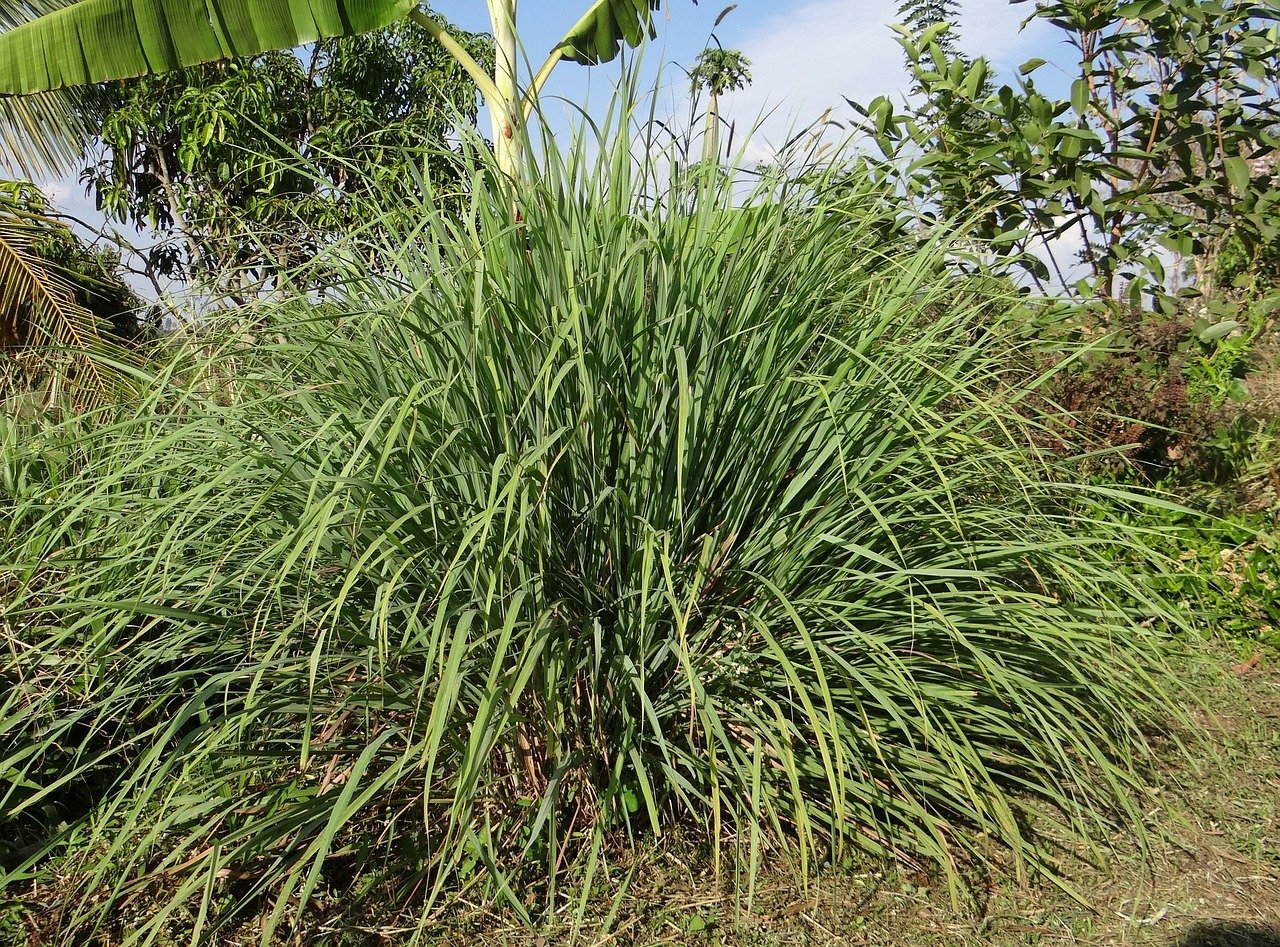
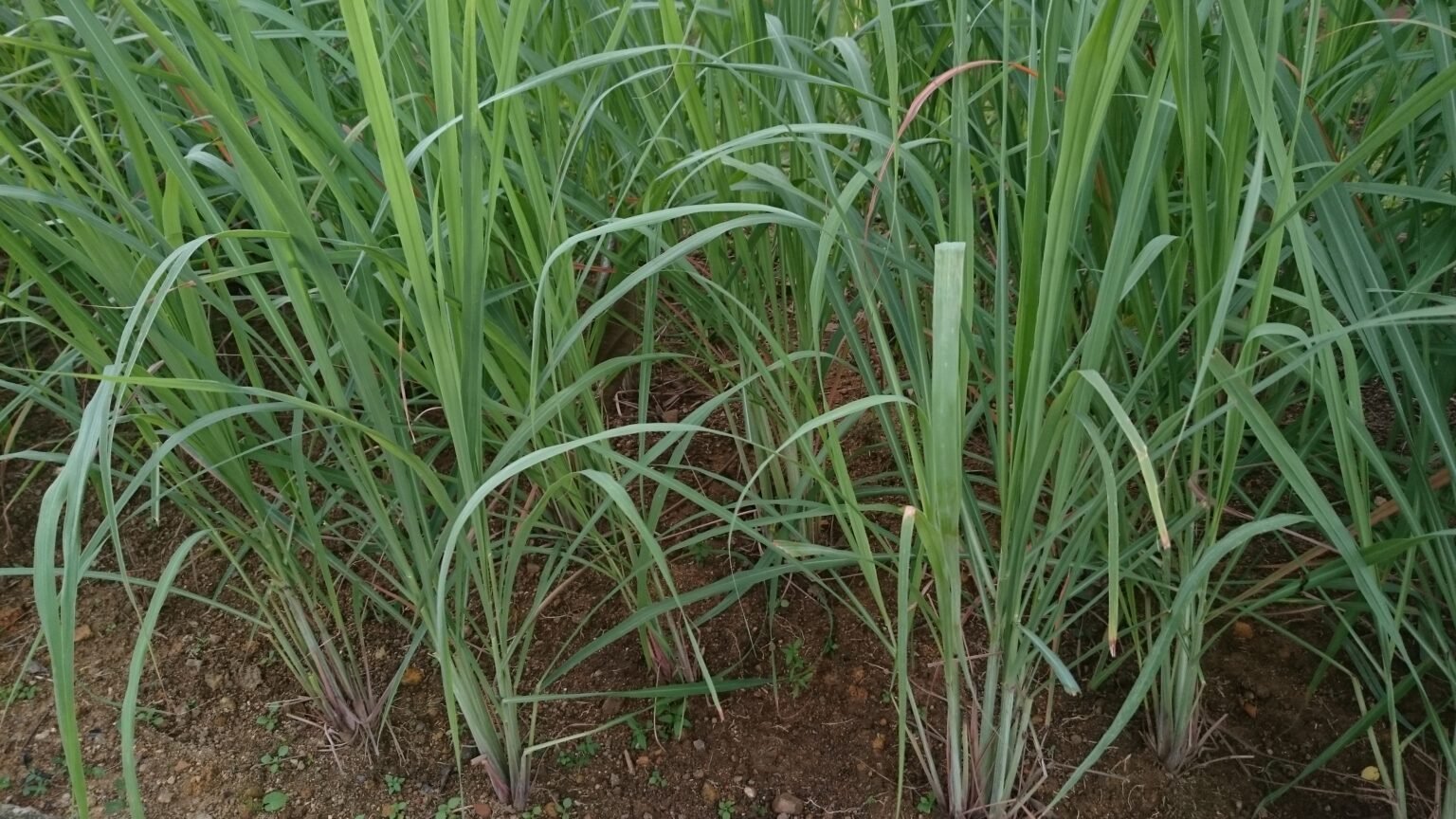
- Lemongrass:- typically grows in dense clumps with tall, slender stems that can reach up to 6 feet (1.8 meters) in height. Its flowering and fruiting period is from September to February.
- Leaves: The leaves are long, thin, and green, resembling grass blades, with a strong citrus scent.
- Roots: The roots are fibrous and form a dense network underground.
Chemical Composition of LemonGrass / Cymbopogon Citratus
- The volatile oil of the plant contains chemicals such as citral (A and ß forms), limonene, isopulegol, citronellic acid, geranyl acetate, and A-camphorine.
- Additionally, compounds like myrcene, methylheptanone, linalool, linalyl acetate, 2-undecanone, citronellol, and nerol have been isolated from the volatile oil.
Chemical Composition of LemonGrass / Cymbopogon Citratus
- Bhutrana, known for its bitter and spicy taste, is light and can help relieve phlegm. It’s known for its flavor and acts as a laxative and expectorant. It’s used to cleanse the mouth and eyes and is also considered helpful for wounds and reducing inflammation. It’s known to be cold-relieving and has properties that might help with digestion and inflammatory conditions.
- It’s believed to have spiritual properties that protect against evil spirits and toxins. It’s used traditionally to treat a variety of ailments including coughs, bad breath, phlegm, diarrhea, loss of taste, and dandruff.
- Studies have shown that extracts from its leaves can help reduce anxiety. Its essential oil has been found to fight certain fungal infections. Extracts from its leaves have also shown promise in reducing inflammation.
Benefits of Lemongrass/Cymbopogon Citratus ( Uses of Lemongrass/Cymbopogon Citratus ?
Lemongrass is prized for its citrus flavor in Asian cuisine and its medicinal properties that aid digestion and combat infections. Its essential oil is used in aromatherapy, and it serves as a natural insect repellent. Lemongrass tea offers relaxation, and it’s used in skincare for its antimicrobial benefits.
Nose Disease
- For Cold: Make a decoction (a kind of tea) with Bhutrun leaves and drink 10-20 ml to relieve cold symptoms.
Mouth Problems:-
- Bad Breath: Make a decoction with Bhutrun leaves and gargle with it, or chew the leaves directly to freshen breath.
Stomach disease ( Abdominal Disorders)
- General Abdominal Disorders: The aromatic oil from Bhutrun leaves can help with bloating, gas, and upset stomach.
- Abdominal Colic: Combine Bhutrun leaves with mint, black pepper, and dry ginger for relief from abdominal cramps.Making a decoction and adding sugar in 15-20 ml decoction and using it provides relief from abdominal pain and flatulence.
Reproductive System Disorders:
- Menstrual Irregularities: Drinking a decoction of Bhutrina (lemongrass) mixed with black pepper (10-30 ml) is helpful for irregular menstruation and related discomfort.
Bone Pain:-
- Joint Disorders: Bhutikadi oil, made from Bhutrina and other substances, is beneficial for Vata-related disorders affecting the thighs, sacral region, legs, sides, arms, neck, and head when used as an enema.
Whole body diseases:-
- Fever: Drinking a decoction called Nagaradi, made from Bhutrina and other ingredients (10-30 ml), mixed with honey and asafoetida, helps with Kapha-Vata type fevers. This remedy also helps with breathing issues, cough, chest pain, hiccups, throat inflammation, and pain in the heart and sides.
Massaging the body with Agurvadi oil, made from ingredients like Bhutrun, is helpful for relieving cold-related fevers.
Fever: Drinking a decoction of Bhutrun (10-30 ml) with cinnamon, ginger, and sugar is effective in treating fever.
Dropsy and Chronic Intermittent Fever: Consuming 1 gram of black pepper mixed in 10-30 ml of Bhutrun’s decoction is beneficial for dropsy caused by chronic intermittent fever.
Fever: Drinking Bhutrun-patra-kwath (10-30 ml) with 1 gram of mint, 1 gram of black pepper, dry ginger, and 5 grams of sugar is beneficial for managing fever.
Back To HOME

Ayuage is a trusted platform dedicated to sharing practical, easy-to-understand, and reliable insights on health, nutrition, wellness, and healthy living. Our goal is to simplify important health topics and provide readers with helpful information that supports smarter food choices and a balanced lifestyle.