All About Holy Basil (Tulsi): Uses, Health Benefits, Ayurvedic Properties & Scientific Research
Introduction
- Holy Basil, commonly known as Tulsi, is a remarkable aromatic plant with a long and respected history in Ayurveda and traditional Indian medicine. Known scientifically as Ocimum tenuiflorum (syn. Ocimum sanctum), Tulsi belongs to the Lamiaceae family and is widely recognized for its distinctive fragrance, traditional medicinal value, and cultural significance.
- For centuries, Tulsi has held a powerful and unique position in Indian households, traditional healthcare practices, and religious culture. It is traditionally regarded as a sacred plant and is commonly grown around homes and temples. Its importance comes not only from its spiritual associations but also from its extensive history of traditional use as an aromatic and medicinal herb.
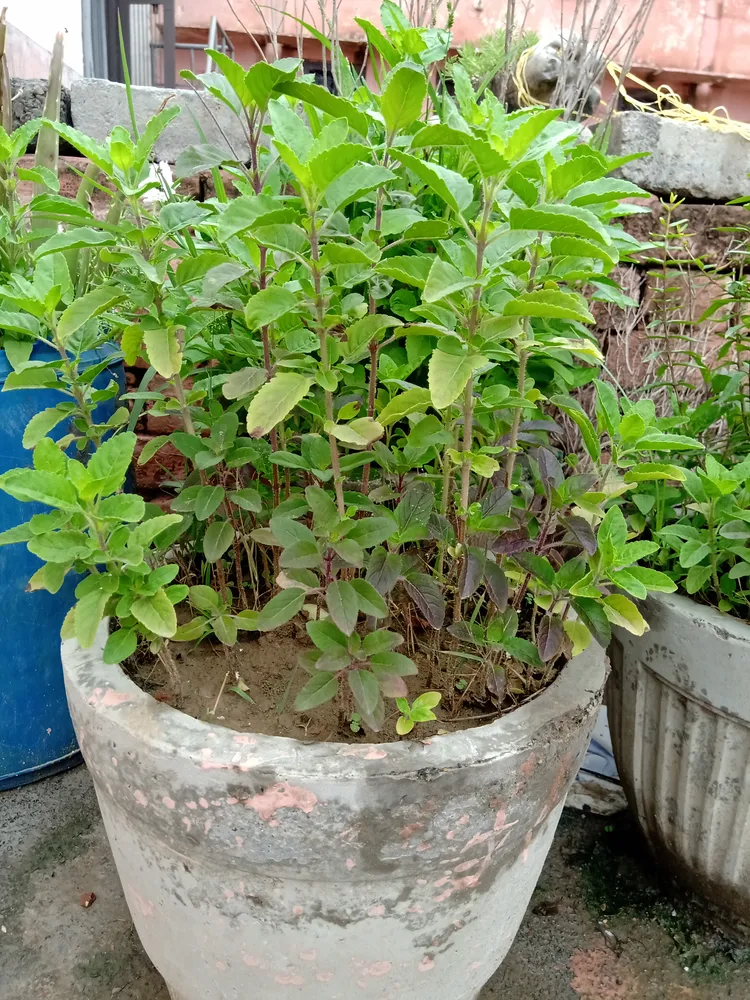
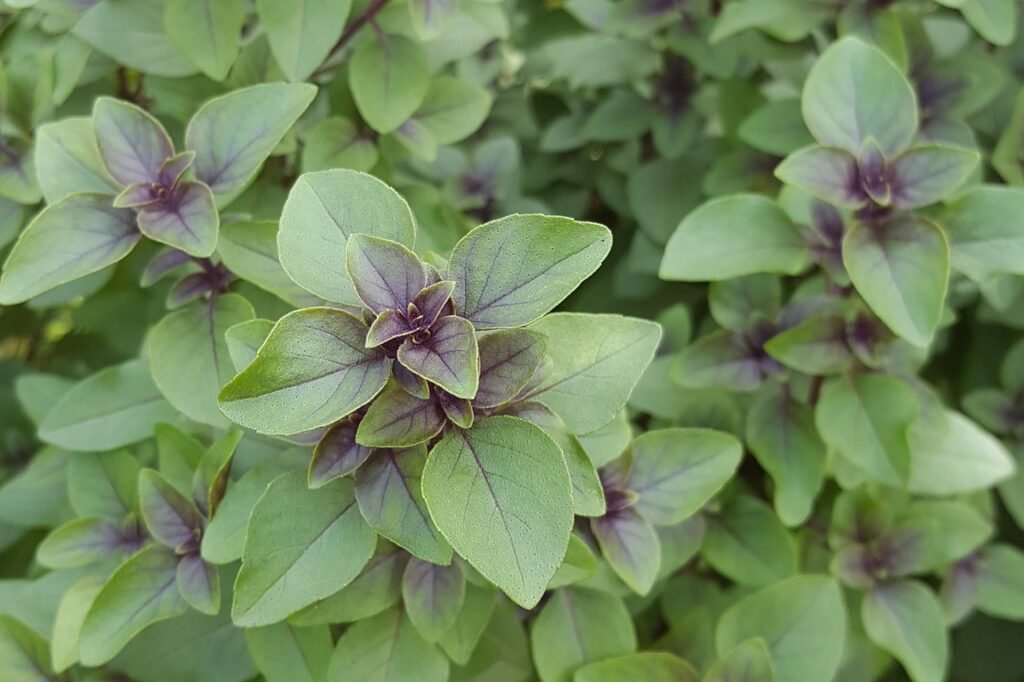
- Tulsi is known by several Sanskrit names, including Vishnu Vallabha, Sukhavallari, Shri Krishna Vallabha, Vrinda, and Vaishnavi. Different forms of Tulsi are traditionally recognized, with Rama Tulsi (Shweta Tulsi) and Krishna Tulsi being among the best known. Krishna Tulsi is generally distinguished by the purple or dark coloration that may appear on its leaves and stems.
- The genus Ocimum contains several other important aromatic plants, including Ocimum basilicum (sweet basil) and Ocimum gratissimum. Although these plants are related and share some common characteristics, they are different species and should not be treated as identical to Holy Basil.
- Tulsi has also been documented in classical Ayurvedic literature. Traditional references to its use can be found in texts such as the Charaka Samhita and Sushruta Samhita, where it is associated with various traditional applications, including respiratory conditions and other areas of Ayurvedic practice.
- Today, Holy Basil continues to attract growing scientific interest because of its diverse phytochemical composition and long history of traditional use. Researchers have investigated its essential oils, phenolic compounds, flavonoids, and other constituents, while studies have explored its potential biological activities.
- This combination of ancient knowledge, botanical importance, cultural heritage, and modern scientific investigation makes Holy Basil an important medicinal plant to study from botanical, Ayurvedic, pharmacological, nutritional, and ethnobotanical perspectives.
Discovery of Holy Basil
- Holy Basil (Tulsi) has been known and used for centuries, particularly in India and other parts of South Asia. Its traditional knowledge was developed through generations of Ayurvedic practice rather than being linked to a single modern-day discoverer.
- Tulsi was described in ancient Ayurvedic texts for its traditional medicinal uses long before modern botanical science established its scientific classification. Today, the plant is scientifically known as Ocimum tenuiflorum and is widely recognized as an important medicinal and aromatic herb.
- Modern research has further increased interest in Tulsi because of its essential oils, phytochemicals, and diverse biological properties, making it an important subject of botanical and scientific study.
Powerful History of Holy Basil
- Holy Basil (Ocimum tenuiflorum) has a long and remarkable history in South Asian traditional medicine and culture. For thousands of years, Tulsi has been valued in Ayurveda as an aromatic and medicinal herb and has also held an important place in traditional household practices.
- Ancient Indian texts describe Tulsi and its traditional applications, reflecting its deep connection with Ayurvedic medicine and cultural traditions. Over time, its use spread across different regions of South Asia, where it became an important plant in traditional healthcare, religious practices, and everyday life.
- Today, Tulsi is cultivated and recognized in many parts of the world, while its historical importance continues to contribute to growing interest in this medicinal and aromatic plant.
Holy Basil in your language
| Name / Term | Language / Country | Local Name |
|---|---|---|
| Holy Basil in English | 🇬🇧 English (Worldwide) | Holy Basil, Sacred Basil, Tulsi, Indian Basil |
| Holy Basil in Hindi | 🇮🇳 Hindi (India) | तुलसी (Tulsi), वृन्दा (Vrinda), कृष्ण तुलसी (Krishna Tulsi) |
| Holy Basil in Sanskrit | 🇮🇳 Sanskrit (India) | तुलसी (Tulasi), सुरसा (Surasa), वृन्दा (Vrinda), वैष्णवी (Vaishnavi) |
| Holy Basil in Bengali | 🇮🇳🇧🇩 Bengali (India/Bangladesh) | তুলসী (Tulasi), তুলসি (Tulsi), কালো তুলসী (Kalo Tulsi) |
| Holy Basil in Assamese | 🇮🇳 Assamese (India) | তুলসী (Tulasi), ক’লা তুলসী (Kola Tulasi) |
| Holy Basil in Gujarati | 🇮🇳 Gujarati (India) | તુલસી (Tulsi), તાલસી (Talasi) |
| Holy Basil in Marathi | 🇮🇳 Marathi (India) | तुळस (Tulas), तुळशी (Tulshi) |
| Holy Basil in Kannada | 🇮🇳 Kannada (India) | ತುಳಸಿ (Tulasi), ಕರಿತುಳಸಿ (Karitulasi), ಶ್ರೀತುಳಸಿ (Sritulasi) |
| Holy Basil in Tamil | 🇮🇳🇱🇰 Tamil (India/Sri Lanka) | துளசி (Tulasi), துழாஅய் (Tuzhaay) |
| Holy Basil in Telugu | 🇮🇳 Telugu (India) | తులసి (Tulasi), నల్ల తులసి (Nalla Tulasi) |
| Holy Basil in Malayalam | 🇮🇳 Malayalam (India) | തുളസി (Tulasi), കൃഷ്ണതുളസി (Krishna Tulasi), തൃത്താവ് (Trittavu) |
| Holy Basil in Odia | 🇮🇳 Odia (India) | ତୁଳସୀ (Tulasi), କଳା ତୁଳସୀ (Kala Tulasi) |
| Holy Basil in Punjabi | 🇮🇳🇵🇰 Punjabi (India/Pakistan) | ਤੁਲਸੀ (Tulsi) |
| Holy Basil in Urdu | 🇮🇳🇵🇰 Urdu (India/Pakistan) | تلسی (Tulsi), تلسی (Tulsi) |
| Holy Basil in Nepali | 🇳🇵 Nepali (Nepal) | तुलसी (Tulasi) |
| Holy Basil in Sinhala | 🇱🇰 Sinhala (Sri Lanka) | තුල්සි (Tulsi) |
| Holy Basil in Thai | 🇹🇭 Thai (Thailand) | กะเพรา (Kaphrao) |
| Holy Basil in Indonesian | 🇮🇩 Indonesian (Indonesia) | Kemangi, Ruku-ruku |
| Holy Basil in Malay | 🇲🇾 Malay (Malaysia) | Kemangi |
| Holy Basil in Chinese | 🇨🇳 Chinese (China) | 圣罗勒 (Shèng luó lè), 神罗勒 (Shén luó lè) |
| Holy Basil in Japanese | 🇯🇵 Japanese (Japan) | ホーリーバジル (Hōrī Bajiru), カミメボウキ (Kamimebōki) |
| Holy Basil in Korean | 🇰🇷 Korean (South Korea) | 홀리바질 (Holli Basil) |
| Holy Basil in Vietnamese | 🇻🇳 Vietnamese (Vietnam) | É đỏ, É rừng, É tía |
| Holy Basil in French | 🇫🇷 French (France) | Basilic sacré |
| Holy Basil in German | 🇩🇪 German (Germany) | Indisches Basilikum |
| Holy Basil in Russian | 🇷🇺 Russian (Russia) | Священный базилик (Svyashchennyy bazilik) |
| Holy Basil in Arabic | 🌍 Arabic-speaking regions | دوحش (Dohsh) |
| Holy Basil in Persian | 🇮🇷 Persian (Iran) | ریحان مقدس (Reyhan-e Moghaddas) |
| Term | Information |
|---|---|
| Botanical Name of Holy basil | Ocimum sanctum Linn. (ओसीमम् सेंक्टम्) Syn. – Ocimum tenuiflorum Linn., Ocimum monachorum Linn. |
| Family of Holy basil | Lamiaceae |
| Genus | Ocimum |
| Species | sanctum |
| Plant Type | Evergreen herb / small shrub |
| Native Region | Indian Subcontinent and Southeast Asia |
| Common English Name | Holy Basil / Sacred Basil |
| Other English Names | Thai Basil, Sacred Basil |
| Hindi Name | Tulsi / Vrinda |
| Sanskrit Name | Tulasi / Surasa / Devadundubhih / Apetarākṣasī / Sulabhā / Bahumañjarī / Gaurī / Bhūtaghnī |
Physical Appearance of Holy Basil
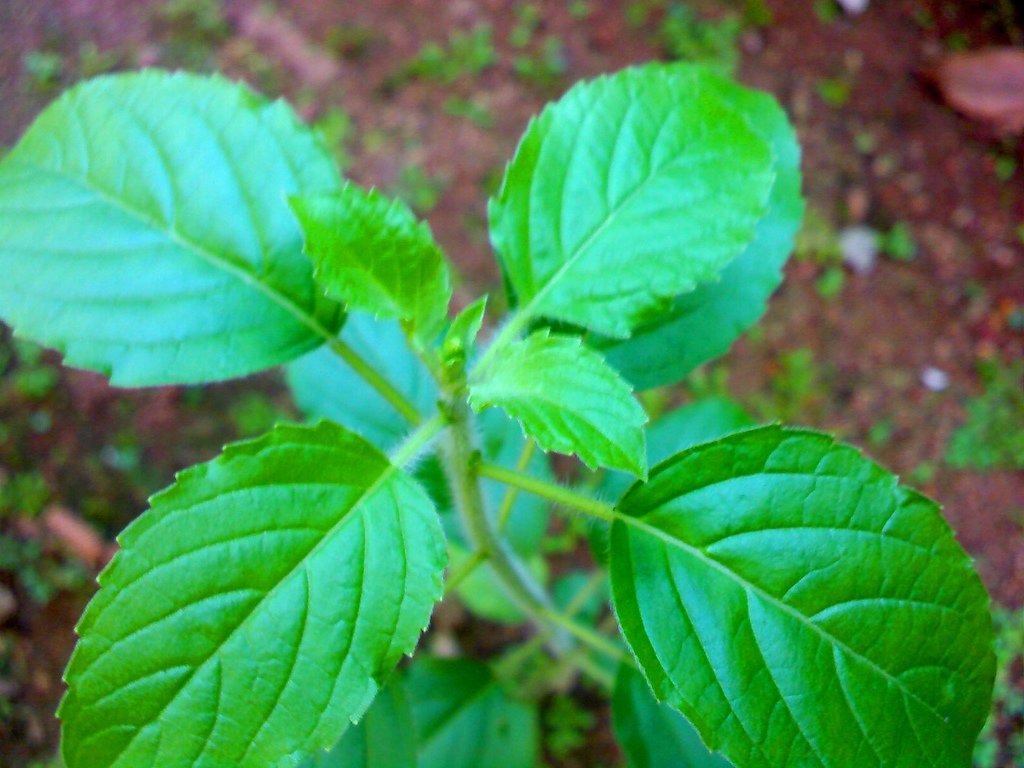
- Tulsi is generally a 30–60 cm tall, erect, branched, aromatic, soft-hairy, perennial herb or small shrub. The lower portion of the stem may sometimes become woody. The branches are generally purplish-red, nearly quadrangular, erect, ascending or spreading, and covered with soft hairs.
🌱 Stem of Holy Basil
- The stem of Tulsi is erect, highly branched and nearly quadrangular (four-angled). The lower portion may become woody with age. The branches are usually purplish-red in colour and may be erect, ascending or spreading. The surface of the stem is covered with soft hairs and contains aromatic glands.
🍃 Leaves of Holy Basil
- The leaves are simple and oppositely arranged on the stem. They are approximately 2.5–6.3 cm long and 1–3 cm wide, with an elliptic to oblong shape. Both surfaces of the leaves are hairy and dotted with minute glandular structures. The leaves are aromatic and release a characteristic fragrance when crushed.
🌸 Flowers of Holy Basil
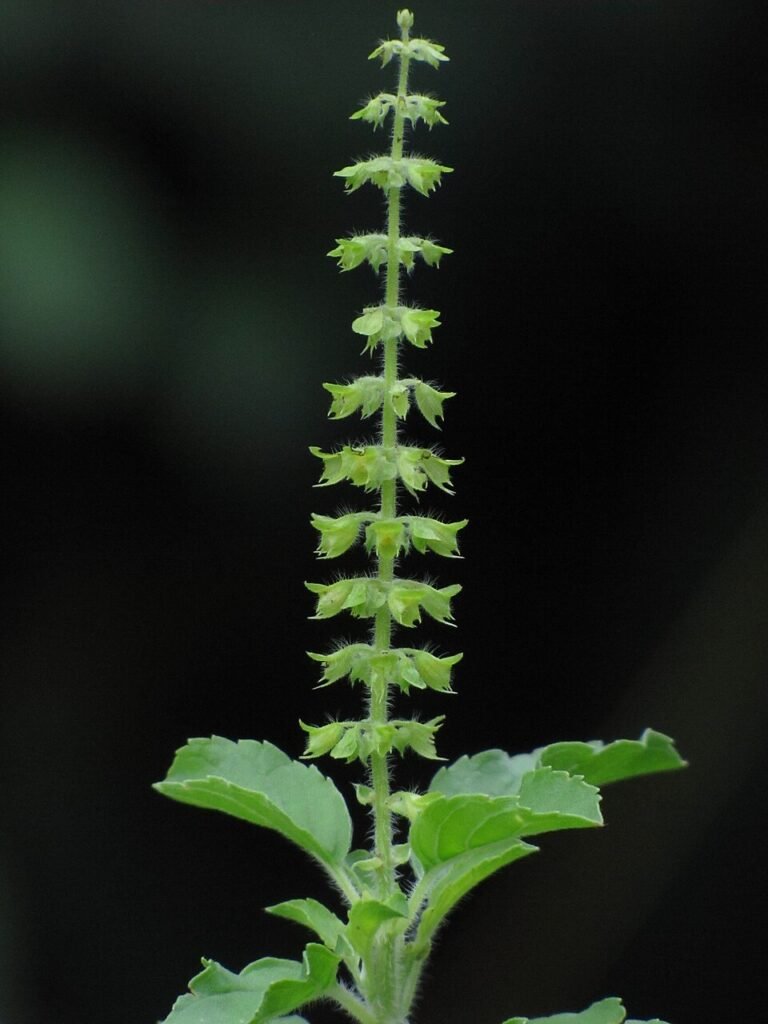
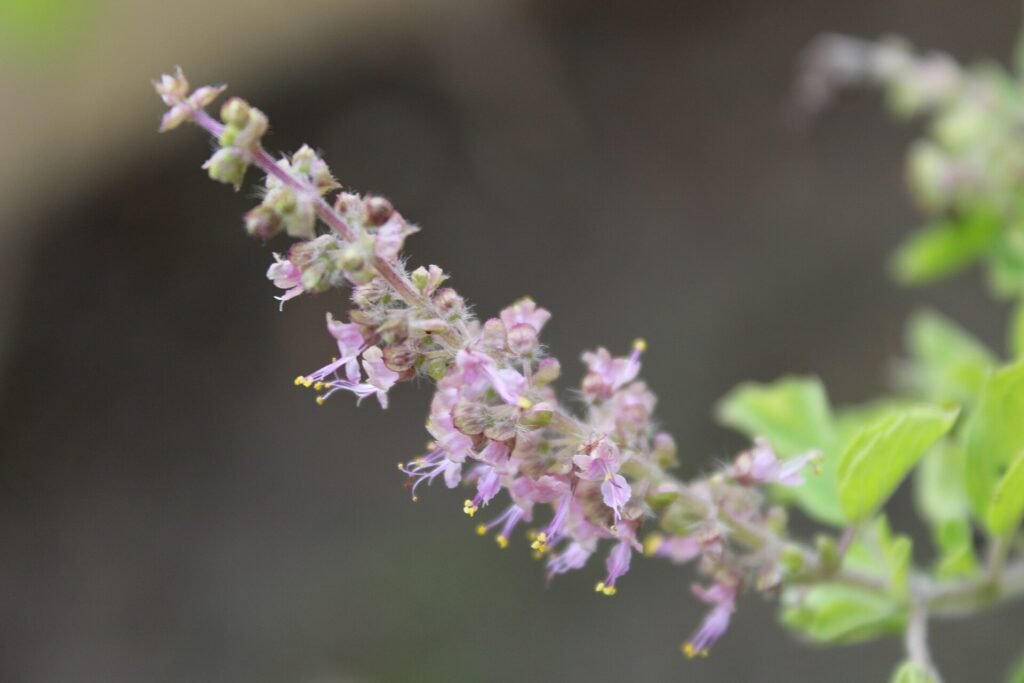
- The flowers are small and white, purple or reddish-purple in colour. They occur in dense, whorled clusters arranged along slender racemes. The racemes are generally about 15–20 cm long and are produced towards the ends of the branches.
🍈 Fruit of Holy Basil
- The fruits are very small, generally nearly spherical, broadly oblong or pointed-ovate in shape and slightly compressed. Each fruit contains small seeds that develop after flowering.
🌰 Seeds of Holy Basil
- The seeds of Tulsi are very small and characteristic in appearance. In Ocimum americanum Linn., the seeds are described as pinkish in colour and become mucilaginous and sticky when soaked in water.
📅 Flowering and Fruiting Season
- The flowering and fruiting period of Tulsi generally extends from July to October.
Nutritional Value of Holy Basil
| Nutrient | Amount per 100 g | Approx. Daily Value (%) |
|---|---|---|
| Energy | 23 kcal | 1% |
| Protein | 3.2 g | 6% |
| Total Fat | 0.6 g | 1% |
| Carbohydrates | 2.7 g | 1% |
| Dietary Fiber | 1.6 g | 6% |
| Calcium | 177 mg | 14% |
| Iron | 3.2 mg | 18% |
| Magnesium | 64 mg | 15% |
| Potassium | 295 mg | 6% |
| Vitamin C | 18 mg | 20% |
| Vitamin A | 264 µg | 29% |
| Folate (Vitamin B9) | 60 µg | 15% |
| Vitamin K | 415 µg | 346% |
| Sodium | 4 mg | <1% |
| Cholesterol | 0 mg | 0% |
Values are approximate and may vary depending on variety, growing conditions, maturity, and whether the leaves are fresh or dried. Holy Basil is generally consumed in relatively small quantities, so the actual dietary contribution from a normal serving is much lower than the values shown for 100 g.
Chemical Composition of Holy Basil
- Holy Basil (Ocimum tenuiflorum), commonly known as Tulsi, contains a diverse range of organic acids, essential oils, volatile compounds, phenolic compounds, triterpenes, phytosterols, alkaloids, glycosides, saponins, tannins, and other naturally occurring phytochemicals.
| Plant Part | Major Chemical Constituents |
|---|---|
| 🌿 Whole Plant | Citric acid, Tartaric acid, Malic acid |
| 🌿 Essential Oil | Eugenol, Methyl ether, Terpinen-4-ol, Decyl aldehyde, γ-Selinene, Nerol, Caryophyllene, Terpinene, Aldehydes, β-Pinene, Camphene, α-Pinene |
| 🍃 Leaves | Eugenol, Methyl chavicol, Non-volatile oil |
| 🌸 Leaves & Flowers | Cadinene, Limonene, Eugenol, β-Carotene, Ursolic acid, Gallic acid, Protocatechuic acid, Vanillic acid, Caffeic acid, Chlorogenic acid, Rosmarinic acid |
| 🌱 Roots | β-Sitosterol, Triterpenes |
| 🌰 Seed Oil | Sitosterol, Palmitic acid, Stearic acid, Oleic acid, Linoleic acid, Linolenic acid |
| 🌿 Panchanga (Whole Plant Parts) | Ascorbic acid (Vitamin C), Carotene, Alkaloids, Glycosides, Saponins, Tannins |
🔬 Important Phytochemicals
- Among the naturally occurring constituents of Holy Basil, eugenol, methyl chavicol, rosmarinic acid, ursolic acid, β-sitosterol, limonene, caryophyllene, and various phenolic acids are notable compounds reported from different parts of the plant. The chemical profile may vary according to the species, plant part, geographical conditions, maturity, and extraction method.
Ayurvedic Properties of Holy Basil
Digestive Properties
- Holy Basil is traditionally regarded as a digestive-supporting herb. It is associated with stimulating appetite, supporting normal digestion, and promoting comfortable digestion. Its aromatic compounds are also traditionally valued for helping maintain normal intestinal function.
Antimicrobial Properties
- Holy Basil contains naturally occurring compounds such as eugenol and other aromatic constituents that have demonstrated antimicrobial activity in phytochemical research. Traditionally, the plant has been valued for its ability to support the body’s natural defense against certain microorganisms.
Antioxidant Properties
- The leaves and other parts of Holy Basil contain phenolic compounds and other phytochemicals with antioxidant activity. These compounds help protect cells from oxidative stress caused by free radicals and contribute to the plant’s overall phytochemical importance.
Anti-Inflammatory Properties
- Holy Basil is traditionally associated with supporting a healthy inflammatory response. Its naturally occurring compounds, including eugenol, rosmarinic acid, and ursolic acid, are widely studied for their potential anti-inflammatory activity.
Aromatic & Stimulating Properties
- Holy Basil is highly aromatic because of its essential oils and volatile compounds. Its characteristic fragrance and flavour are mainly associated with compounds such as eugenol, methyl chavicol, terpenes, and other volatile constituents. Traditionally, these aromatic properties are considered stimulating and refreshing.
Urinary-Supporting Properties
- The seeds of Holy Basil are traditionally described as supporting normal urine production and urinary elimination. This property is associated particularly with the seeds and is part of the plant’s traditional herbal profile.
Sweating-Supporting Properties
- Holy Basil is traditionally regarded as a warming herb that may support natural sweating. This characteristic is associated with its warming and aromatic nature.
Phytochemical Properties
- The biological properties of Holy Basil are associated with a diverse range of naturally occurring phytochemicals, including eugenol, rosmarinic acid, ursolic acid, flavonoids, terpenes, phenolic compounds, and essential oils. These constituents make Holy Basil an important subject of traditional herbal medicine and modern phytochemical research.
General Revitalizing Properties
- Holy Basil has traditionally been valued as a supportive and revitalizing herb. It is commonly regarded as helping maintain general vitality, freshness, and overall well-being when used as part of traditional herbal practices.
Cultivation & Growing of Holy Basil
- Holy Basil (Ocimum tenuiflorum) is a warm-season aromatic herb that grows well in tropical and subtropical climates. It is relatively easy to cultivate and can be grown in home gardens, pots, containers, and commercial fields when provided with adequate sunlight, warmth, moisture, and well-drained soil.
☀️ Climate
- Holy Basil grows best in warm, sunny, and moderately humid conditions. A temperature range of approximately 20–35°C is generally suitable for healthy growth. The plant performs well under full sunlight and usually requires around 6–8 hours of direct sunlight per day. It is sensitive to frost and prolonged cold conditions, so cultivation should be avoided in areas experiencing freezing temperatures.
🌿 Soil
- Holy Basil can grow in a variety of soil types but performs best in fertile, loose, well-drained soil with good organic matter. Sandy loam or loamy soil is particularly suitable because it allows proper root development and prevents waterlogging. A slightly acidic to neutral soil, with a pH of approximately 6.0–7.5, is generally suitable for cultivation. Heavy or poorly drained soils should be avoided because excess moisture around the roots can affect plant growth.
🌱 Propagation
Holy Basil can be propagated mainly through seeds and stem cuttings. Seed propagation is the most common method for raising new plants. Seeds are usually sown in a nursery bed, seed tray, or directly into prepared soil at a shallow depth and kept lightly moist until germination. Under favourable warm conditions, seeds generally germinate within 7–14 days. Healthy seedlings can be transplanted once they have developed several true leaves.
Stem cuttings can also be used to produce new plants. Healthy, disease-free stems with several nodes can be planted in a moist, well-drained growing medium. With suitable warmth and moisture, the cuttings can develop roots and establish new plants.
💧 Watering
- Holy Basil requires regular moisture during its active growth period but does not tolerate continuously waterlogged soil. Water the plant when the upper layer of soil begins to dry, keeping the soil moderately moist rather than constantly wet. Young plants may require more frequent watering, while established plants generally need less frequent irrigation. Proper drainage is important to prevent root problems caused by excess water.
🌾 Fertilization
For vigorous growth, Holy Basil benefits from soil enriched with well-decomposed organic manure or compost. A balanced organic fertilizer can be applied periodically during the growing season. Excessive use of nitrogen fertilizers should be avoided because it may encourage excessive leafy growth while affecting the plant’s natural aroma and overall growth balance.
✂️ Pruning & Plant Care
- Regular pruning helps Holy Basil develop a bushier and more branched growth habit. The growing tips can be pinched or trimmed periodically, especially when the plant becomes tall or begins producing flower spikes. Removing excess weeds around the plant reduces competition for water and nutrients and improves air circulation.
🌿 Harvesting
Holy Basil leaves can be harvested once the plant has become well established and has produced sufficient healthy foliage. For regular leaf harvesting, the young shoots and leaves can be picked or cut from the upper portions of the plant. Harvesting is preferably done during the morning after the dew has dried, when the leaves are fresh and aromatic.
For essential-oil production or maximum aromatic content, harvesting is commonly carried out around the flowering stage. The harvested leaves and aerial parts should be handled gently and dried in a clean, shaded, and well-ventilated area to help preserve their natural colour, aroma, and active plant constituents.
scientific research of Holy Basil
👨⚕️ Human Studies
- Negar Jamshidi & Marc M. Cohen (2017) conducted a systematic review of human studies on Tulsi. They identified 24 human studies reporting potential effects in areas including metabolic disorders, cardiovascular health, immunity, and neurocognitive function. The researchers concluded that the findings were promising but emphasized the need for better-designed studies to establish dosage, safety, and clinical effectiveness.
- Jamila et al. (2022) conducted a randomized, double-blind, placebo-controlled clinical trial involving adults experiencing stress. Participants receiving a standardized Ocimum tenuiflorum extract showed greater improvements in perceived stress and insomnia scores compared with placebo. Lower hair cortisol levels and reduced physiological stress responses were also observed after 8 weeks.
- Sampath et al. (2015) studied Holy Basil leaf extract in healthy adults using a randomized, placebo-controlled design. Participants receiving 300 mg of ethanolic Ocimum sanctum leaf extract daily for 30 days showed improvements in several cognitive-performance measures compared with placebo, suggesting possible cognition-supporting effects.
- An earlier randomized placebo-controlled study also investigated Holy Basil leaves in people with non-insulin-dependent diabetes. The study reported reductions in fasting and post-meal blood glucose levels during the treatment period. However, this was an older study, and these findings are not sufficient to establish Tulsi as a replacement for diabetes treatment.
🐀 Animal Studies
- Animal studies provide broader evidence for the biological activity of Holy Basil. Extracts of Ocimum tenuiflorum have been investigated in experimental models for stress, inflammation, oxidative stress, metabolic function, cognitive performance, and other biological processes.
- In experimental animals, Holy Basil extracts have shown effects associated with antioxidant, anti-inflammatory, metabolic, neuroprotective, and stress-related activity. Some studies also suggest that its phytochemicals may influence biological pathways involved in the body’s response to stress.
- These findings are useful for understanding possible mechanisms of action, but animal results should not be interpreted as proof that the same effects occur in humans. Differences in dosage, metabolism, extracts, and experimental conditions can substantially affect the results.
🧫 Laboratory & In-Vitro Research
- Laboratory studies have demonstrated biological activity from several compounds found in Holy Basil, including eugenol, rosmarinic acid, ursolic acid, and other phenolic and terpenoid compounds.
- In-vitro research has reported antioxidant, antimicrobial, anti-inflammatory, and other biological activities of Holy Basil extracts and their constituents. These studies help researchers identify potentially active compounds and understand how the plant may interact with cells or microorganisms.
- However, an effect observed in a test tube or cell culture does not necessarily mean that the same effect will occur after consuming Holy Basil. The concentration used in laboratory experiments may also be considerably different from the levels reached in the human body.
📊 What Current Evidence Says
- The current scientific evidence supports biological activity and research potential, particularly for stress-related effects, antioxidant activity, antimicrobial activity, and certain metabolic effects. Human studies provide some encouraging results, especially for stress and subjective sleep-related outcomes, but the overall clinical evidence remains limited.
- A recent systematic review of research on Ocimum species concluded that much of the evidence remains preclinical, meaning it comes from laboratory and animal research rather than well-established human clinical trials. The review emphasized the need for more standardized products and larger randomized controlled trials before therapeutic effectiveness can be firmly established in humans.
- Therefore, Holy Basil should currently be viewed as a promising medicinal plant under scientific investigation rather than a proven treatment for specific diseases. The results of research can vary depending on the plant variety, plant part, extraction method, dose, and preparation used.
Medicinal Uses of Holy Basil
🧠 Head-Related Conditions
1. Head Disorders: 1–2 g of powdered, shade-dried Holy Basil flower spikes (Manjari) taken with honey is traditionally used for head-related disorders.
2. Memory & Mental Function: Consuming 5 Holy Basil leaves daily with water is traditionally described as supporting intellect, memory, mental capacity, and brain function.
3. Headache: 1–2 drops of Holy Basil oil administered into the nostrils is traditionally used for chronic headache and other head-related conditions.
4. Head Lice: Applying Holy Basil oil to the scalp is traditionally used to eliminate head lice and their eggs (nits).
5. Facial Skin: Applying Holy Basil oil to the face is traditionally described as helping improve the appearance and clarity of the skin.
👂 Ear Disorders
1. Earache: 2 drops of warmed Holy Basil leaf juice are traditionally administered into the ear for ear pain. Putting plant juice into the ear should only be done under appropriate medical guidance.
2. Swelling Behind the Ear: Holy Basil leaves and castor sprouts are crushed together with a small amount of salt and applied as a warm external paste over swelling behind the ear.
🫁 Respiratory Disorders
1. Cough & Breathing Problems: Holy Basil leaves including flower spikes 50 g, ginger 25 g, and black pepper 15 g are added to 500 ml water and boiled until one-fourth remains. The preparation is then strained, mixed with 10 g powdered cardamom seeds, and 200 g sugar is added and cooked until a one-string syrup consistency is obtained. The syrup is traditionally given in doses of ½ to 1½ teaspoon for children and 2 to 4 teaspoons for adults for cough, breathing problems, whooping cough, throat irritation, and related conditions. It may traditionally be taken with warm water for cold and asthma-related symptoms.
2. Chronic Cough: 10 Holy Basil leaves, 3 yellow Vasaka leaves, 1 black pepper, ginger equivalent to 4–6 peas, and a 6-inch-long piece of Giloy stem are crushed and boiled in 1 glass of water until half remains. 10–15 g jaggery is then added and the preparation is divided into 3 doses, traditionally taken at intervals of 4 hours.
3. Cough: 5–10 ml Holy Basil leaf juice mixed with black pepper powder is traditionally taken to reduce the intensity of coughing.
4. Dry Cough & Asthma: Holy Basil flower spikes, dry ginger, onion juice, and honey are traditionally combined and administered for dry cough and asthma-related symptoms.
💧 Kidney & Urinary Disorders
1. Urinary & Bladder Disorders: 1 g powder prepared from Holy Basil seeds and cumin is mixed with 3 g sugar candy (Mishri) and traditionally taken with milk morning and evening for burning urination, urinary pus, and bladder inflammation.
2. Kidney Stones: 1–2 g Holy Basil leaves are crushed and mixed with honey. This preparation is traditionally described as being used for kidney stones.
🦴 Bone & Joint Disorders
1. Joint Inflammation: 2–4 g Holy Basil Panchanga powder is traditionally taken with milk morning and evening for joint inflammation and arthritic pain.
2. Sciatica: Holy Basil decoction is traditionally used as a steam fomentation (Bafara) over the affected nerve region. Black Holy Basil is traditionally considered more useful for swelling and painful conditions.
3. Vata-Related Joint & Bone Disorders: Steam fomentation using Holy Basil Panchanga is traditionally described for conditions involving the joints, bones, and related pain disorders.
💪 General Health & Fever-Related Uses
1. Strength & Vitality: 20 g Holy Basil seed powder is mixed with 40 g sugar candy (Mishri). 1 g of this mixture is traditionally taken for several days during winter. It is traditionally described as supporting strength, vitality, immunity, and the nervous system.
2. General Vata- and Kapha-Related Conditions: 5–10 ml black Holy Basil leaf juice is traditionally mixed with twice its quantity of warm cow’s ghee and administered.
3. Malaria-Related Traditional Use: Holy Basil has traditionally been regarded as having mosquito-repellent and fever-related properties. A decoction prepared from Holy Basil leaves has traditionally been consumed morning, afternoon, and evening for malaria-related symptoms. Malaria requires prompt medical diagnosis and antimalarial treatment; Holy Basil should not replace medical care.
4. Fever: 5–10 ml Holy Basil leaf juice mixed with black pepper powder is traditionally used three times daily.
5. Intermittent Fever: 15 ml Holy Basil root decoction is traditionally taken twice daily.
6. Fever: A decoction prepared from 20 Holy Basil leaves and 10 black peppercorns is traditionally administered morning, afternoon, and evening.
7. Fever: 21 Holy Basil leaves, 5 cloves, and 500 ml ginger juice are crushed and strained, then mixed with 10 g honey and traditionally consumed.
8. Fever with Excess Mucus: Holy Basil leaves are cooked in water until half the water remains. The preparation is strained, a pinch of rock salt is added, and it is traditionally consumed warm.
9. Enteric Fever: 10 Holy Basil leaves and 2–1 g mace (Javitri) are crushed and traditionally administered with honey.
10. Enteric Fever: Equal quantities of black Holy Basil juice and mint juice are traditionally administered morning, afternoon, and evening for 3–7 days.
11. Ordinary Fever: Holy Basil leaves, white cumin, small long pepper, and sugar are crushed together and traditionally administered morning and evening.
12. Fever: Equal parts of Holy Basil leaf powder, dry ginger powder, and carom seed powder are mixed and traditionally taken three times daily.
👁️ Eye Disorders
- Night Blindness: 5–10 drops of fresh Holy Basil leaf juice are traditionally administered into the eyes several times a day for night blindness. Direct application of plant juice to the eyes is not considered a modern evidence-based treatment and may cause irritation or injury.
👃 Nasal Disorders
- Chronic Nasal Congestion (Pinasa): Crushed Holy Basil leaves or flower spikes are traditionally inhaled for relief from chronic nasal congestion and related nasal conditions.
👄 Mouth & Throat Disorders
1. Toothache: A small pill prepared from black pepper and Holy Basil leaves is traditionally placed beneath the affected tooth for toothache.
2. Throat Disorders: Holy Basil juice mixed with mildly warm water is traditionally used as a gargle for throat-related problems.
3. Mouth, Teeth & Throat Problems: Water containing Holy Basil juice, turmeric, and rock salt is traditionally used as a gargle for various mouth, dental, and throat conditions.
4. Hoarseness of Voice: The root of Holy Basil is traditionally sucked in a manner similar to liquorice root for relief from hoarseness.
🍽️ Digestive Disorders
1. Vomiting: 10 ml Holy Basil leaf juice is traditionally taken with an equal quantity of ginger juice and 500 mg cardamom powder.
2. Diarrhea: 10 Holy Basil leaves and 1 g cumin seeds are crushed together, mixed with honey, and traditionally administered 3–4 times daily for diarrhea, abdominal cramps, and dysentery.
3. Diarrhea: 50–60 ml Holy Basil infusion containing 125 mg nutmeg powder is traditionally taken 3–4 times daily.
4. Weak Digestion: Holy Basil leaf juice or infusion is traditionally administered three times daily before meals for indigestion, weak digestion, and certain liver and spleen disorders.
5. Indigestion: 2 g Holy Basil flower spikes are crushed and taken with black salt 3–4 times daily.
🟤 Liver & Spleen Disorders
1. Jaundice: 1–2 g Holy Basil leaves are crushed and traditionally taken with buttermilk.
2. Jaundice: A decoction prepared from Holy Basil leaves is traditionally consumed for jaundice.
♀️ Reproductive-System Disorders
1. For Supporting Sexual Function: 2–4 g Holy Basil root powder and Yam (Jamikand) powder are combined, and 125–250 mg of the mixture is traditionally placed in betel leaf (paan) and consumed.
2. Postpartum Pain: Holy Basil leaf juice is traditionally combined with aged jaggery and sugar candy and administered immediately after childbirth for postpartum pain.
3. Sexual Weakness: Holy Basil seed powder or root powder is mixed with an equal quantity of jaggery and traditionally taken in a dose of 1–3 g with cow’s milk continuously for one month or six weeks.
4. Seminal Weakness: 1 g Holy Basil seed powder is traditionally taken with milk morning and evening.
🧴 Skin Disorders & Wounds
1. Skin Disorders: 10–20 ml Holy Basil leaf juice is traditionally consumed every morning for certain chronic skin disorders.
2. Ringworm & Skin Conditions: Holy Basil leaves are traditionally ground with lemon juice and applied externally over ringworm, inflammatory skin conditions, and other skin disorders.
3. Chronic Skin Disorders: Holy Basil leaf juice, lime, and cow’s ghee are traditionally ground together and applied externally.
4. White Skin Patches: Equal quantities of Holy Basil leaf juice, lemon juice, and Kansaudi leaf juice are placed in a copper vessel and kept in sunlight for 24 hours. After thickening, the preparation is traditionally applied externally to affected skin areas and facial blemishes.
5. Chronic Skin Disorders: Holy Basil root is traditionally ground with dry ginger and consumed with water in the morning.
6. Skin Disorders: 5 ml Holy Basil root juice is traditionally consumed daily for certain chronic skin conditions.
7. Wounds: 10–20 g Holy Basil leaves are boiled, crushed, cooled, and applied as a paste to wounds. Traditionally, this is described as helping cleanse wounds and support healing.
8. Wound Care: Holy Basil leaf juice is traditionally applied externally to wounds for cleansing and healing.
9. Burning & Sinus Tracts: Crushed Holy Basil seeds are traditionally applied as an external paste for burning sensations and certain sinus-tract wounds.
10. Wound Infestation: Holy Basil juice is traditionally applied externally to wounds affected by worms or larvae.
11. Hives & Skin Irritation: Holy Basil juice is traditionally applied externally for hives and related skin irritation.
👶 Traditional Pediatric Uses
1. Pediatric Conditions: Clove, Holy Basil leaf, and Tankana powders are mixed with water and traditionally administered to children for digestive disorders, breathing problems, cough, and mucus-related fever.
2. Infant Conditions: Holy Basil leaf juice has traditionally been used in infants for conditions such as cough, common cold, fever, diarrhea, and vomiting. Use in infants should only be undertaken under qualified medical supervision.
☠️ Traditional Poison-Management Uses
1. Snakebite: 5–10 ml Holy Basil leaf juice has traditionally been administered orally, while a paste prepared from its flower spikes and roots has traditionally been applied to the bite site. If the person becomes unconscious, the traditional text describes administering the juice into the nostrils. Snakebite is a medical emergency. These traditional practices must not replace immediate emergency medical treatment or antivenom.
2. Head-Related Poisoning: When traditional descriptions associate toxic effects with the head region, nasal administration (Nasya) of the juice or powder of Bandhujiva, Bharangi, and black Holy Basil root is described.
Frequently Asked Questions (FAQs)
1. What are the benefits of Holy Basil (Tulsi)?
2. Can you eat Tulsi leaves every day?
- Holy Basil (Tulsi) is traditionally valued for its antioxidant, antimicrobial, digestive, stress-supporting, and anti-inflammatory properties. Modern research has also investigated its possible effects on stress, sleep, blood sugar, and cognitive function, although more high-quality human studies are needed.
- For many healthy adults, consuming a small amount of fresh Tulsi leaves as part of a normal diet is generally considered well tolerated. However, there is no scientifically established requirement to eat a specific number of leaves every day
3. Is Tulsi good for stress and anxiety?
4. Is Tulsi tea good for you?
- Holy Basil has traditionally been used as a stress-supporting herb. Some human studies suggest that standardized Holy Basil extracts may help reduce perceived stress and support sleep and mood, but more research is needed to confirm its effectiveness.
- Tulsi tea is a popular way to consume Holy Basil. It provides aromatic plant compounds and is traditionally enjoyed for relaxation, digestion, and general wellness. However, Tulsi tea should be considered a complementary wellness drink rather than a treatment for a medical condition.
5. Can Tulsi help lower blood sugar?
6. What are the side effects of Holy Basil?
- Some clinical studies have reported improvements in blood glucose levels after using Holy Basil preparations. However, the evidence is still limited, and Tulsi should not replace prescribed diabetes medication. People taking blood-sugar-lowering medicines should consult a healthcare professional before using concentrated Tulsi supplements.
- Holy Basil is generally well tolerated when consumed in ordinary food or tea amounts. Some people may experience mild digestive discomfort, nausea, loose stools, or headache. Concentrated extracts may have different effects and should be used according to product directions.
7. Is Tulsi safe during pregnancy and breastfeeding?
8. What is the difference between Tulsi and regular Basil?
- Safety information for medicinal doses of Holy Basil during pregnancy and breastfeeding is limited. Therefore, pregnant or breastfeeding individuals should avoid medicinal or concentrated Tulsi supplements unless specifically advised by a qualified healthcare professional.
- Tulsi, or Holy Basil, usually refers to Ocimum tenuiflorum, while common culinary basil is generally Ocimum basilicum. Both belong to the mint family, but they differ in aroma, appearance, phytochemical composition, and traditional uses.
9. Is Holy Basil good for digestion?
10. Can Holy Basil help with weight loss?
- Holy Basil has traditionally been used to support digestion, appetite, and comfortable intestinal function. Its aromatic compounds are also associated with carminative properties. However, strong clinical evidence for treating digestive diseases with Tulsi is still limited.
- There is not enough strong human evidence to conclude that Holy Basil directly causes weight loss. Some research has investigated its effects on metabolism and stress, but Tulsi should not be considered a proven weight-loss treatment. A balanced diet and regular physical activity remain the main foundations of healthy weight management.
Back To Home

Ayuage is a trusted platform dedicated to sharing practical, easy-to-understand, and reliable insights on health, nutrition, wellness, and healthy living. Our goal is to simplify important health topics and provide readers with helpful information that supports smarter food choices and a balanced lifestyle.