All About Margosa Tree (Neem) — Azadirachta indica: Benefits, Uses, Properties, Botanical Name & Family
Introduction
Neem (Azadirachta indica) is one of the most remarkable, powerful, and versatile medicinal trees of the Indian subcontinent. Native to the Indian subcontinent, neem is widely found across India, Pakistan, Bangladesh, Sri Lanka, Nepal, and Myanmar, and it is now cultivated or naturalized in many tropical and subtropical regions of Africa, Southeast Asia, Australia, and parts of the Americas.
Often called the “village pharmacy” because of its extensive traditional uses, almost every part of the neem tree—including its leaves, bark, flowers, fruits, seeds, and oil—has been valued in traditional medicine and everyday healthcare practices. Neem has attracted significant scientific interest for its promising antimicrobial, insect-repellent, anti-inflammatory, antioxidant, and other biological activities.
From traditional herbal medicine to modern scientific research, neem remains an exceptional plant with powerful potential. This complete guide explores the botanical identity, distribution, traditional uses, properties, active compounds, health applications, benefits, precautions, and scientific research associated with neem.
Discovery of Margosa Tree
- Neem (Azadirachta indica), commonly known as the Margosa Tree, is believed to have originated in the Indian subcontinent. Its natural distribution is strongly associated with India and neighboring parts of South Asia, where the tree has been recognized and utilized for centuries. The species was formally described botanically by Alphonse Pyramus de Candolle, while the currently accepted scientific name Azadirachta indica was established by Adrien-Henri de Jussieu.
- As botanical knowledge expanded, neem became recognized beyond its traditional range because of its distinctive medicinal, agricultural, and insect-repellent properties. Today, it is widely cultivated and established in many tropical and subtropical regions around the world.
Powerful History of Margosa Tree
- Neem has a remarkable and deeply rooted history in the traditional practices of the Indian subcontinent. Ancient Ayurvedic texts refer to neem by names such as Nimba and Arishta, and different parts of the tree were traditionally used for skin care, oral hygiene, wound care, household sanitation, and various other purposes.
- For generations, neem leaves, bark, flowers, fruits, seeds, and oil have been incorporated into traditional preparations. Its natural insect-repellent properties also made neem valuable in agriculture and everyday household practices.
- Over time, knowledge of neem spread from South Asia to other tropical regions. Today, its long traditional history, versatile uses, and growing scientific interest have made neem one of the world’s best-known medicinal and multipurpose trees.
Margosa Tree in your language
| Name / Term | Language / Country | Local Name |
|---|---|---|
| Margosa Tree in English | 🇬🇧 English (Worldwide) | Neem, Margosa Tree, Indian Lilac |
| Margosa Tree in Hindi | 🇮🇳 Hindi (India) | नीम (Neem), निम्ब (Nimb) |
| Margosa Tree in Sanskrit | 🇮🇳 Sanskrit (India) | निम्ब (Nimba), अरिष्ट (Arishta) |
| Margosa Tree in Bengali | 🇮🇳 Bengali (India/Bangladesh) | নিম (Nim), নিম গাছ (Nim Gachh) |
| Margosa Tree in Assamese | 🇮🇳 Assamese (India) | নিম (Nim) |
| Margosa Tree in Gujarati | 🇮🇳 Gujarati (India) | લીંબડો (Limdo) |
| Margosa Tree in Marathi | 🇮🇳 Marathi (India) | कडुलिंब (Kadulimb) |
| Margosa Tree in Kannada | 🇮🇳 Kannada (India) | ಬೇವು (Bevu), ಬೇವುಮರ (Bevu Mara) |
| Margosa Tree in Tamil | 🇮🇳 Tamil (India/Sri Lanka) | வேம்பு (Vembu), வேப்பமரம் (Veppamaram) |
| Margosa Tree in Telugu | 🇮🇳 Telugu (India) | వేప (Vepa), వేపచెట్టు (Vepachettu) |
| Margosa Tree in Malayalam | 🇮🇳 Malayalam (India) | വേപ്പ് (Veppu), ആര്യവേപ്പ് (Ariyaveppu) |
| Margosa Tree in Odia | 🇮🇳 Odia (India) | ନିମ (Nim), ନିମ୍ବ (Nimba) |
| Margosa Tree in Punjabi | 🇮🇳 Punjabi (India/Pakistan) | ਨਿੰਮ (Nim) |
| Margosa Tree in Urdu | 🇵🇰 Urdu (India/Pakistan) | نیم (Neem/Nim) |
| Margosa Tree in Nepali | 🇳🇵 Nepali (Nepal) | नीम (Neem) |
| Margosa Tree in Sinhala | 🇱🇰 Sinhala (Sri Lanka) | කොහොඹ (Kohomba) |
| Margosa Tree in Thai | 🇹🇭 Thai (Thailand) | สะเดา (Sadao) |
| Margosa Tree in Indonesian | 🇮🇩 Indonesian (Indonesia) | Mimba, Intaran |
| Margosa Tree in Malay | 🇲🇾 Malay (Malaysia) | Mambu, Veppam |
| Margosa Tree in Chinese | 🇨🇳 Chinese (China) | 印度楝 (Yìndù liàn) |
| Margosa Tree in Japanese | 🇯🇵 Japanese (Japan) | ニーム (Nīmu) |
| Margosa Tree in Korean | 🇰🇷 Korean (South Korea) | 님나무 (Nimnamu) |
| Category | Details |
|---|---|
| Common Name | Neem |
| English Name | Margosa Tree, Neem Tree, Indian Lilac |
| Botanical Name | Azadirachta indica (L.) A. Juss. |
| Synonyms | Melia indica (A. Juss.) Brandis |
| Family | Meliaceae |
| Genus | Azadirachta |
| Species | Azadirachta indica |
| Plant Type | Evergreen medicinal tree |
| Native Region | Indian Subcontinent |
| Traditional Importance | Medicinal, antimicrobial, insect-repellent and agricultural uses |
Physical Appearance of Margosa Tree
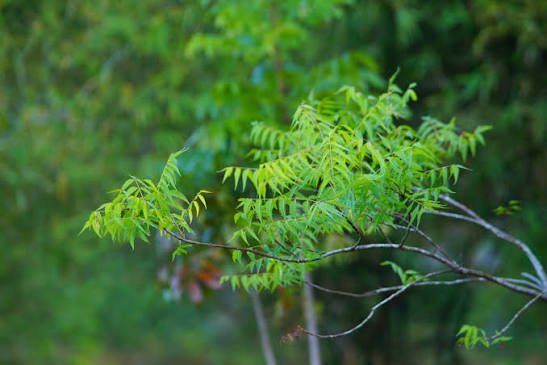
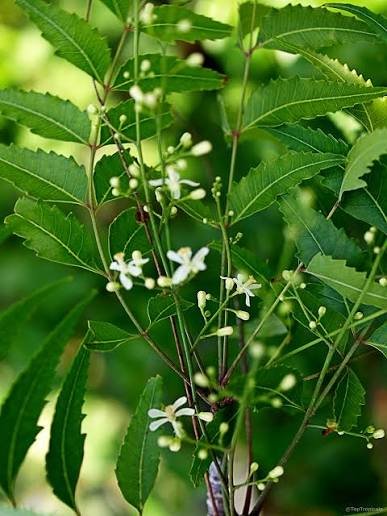
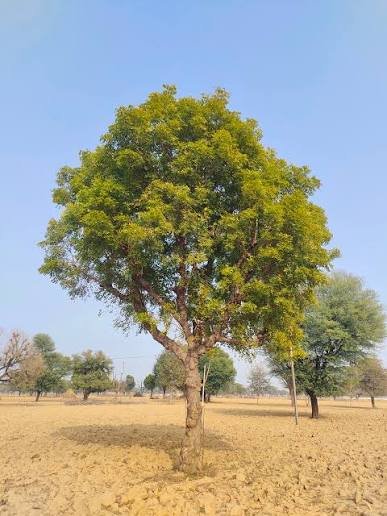
- Neem (Azadirachta indica) is a medium to large, dense, evergreen tree that generally grows about 15–20 metres tall. It develops a straight, long trunk with a broad, spreading crown and numerous branches.
🌳 Trunk & Bark of Neem
- The trunk is straight and cylindrical, while the bark is rough and grey to dark grey on the outside. The inner bark is typically reddish-brown.
🍃 Leaves of Neem
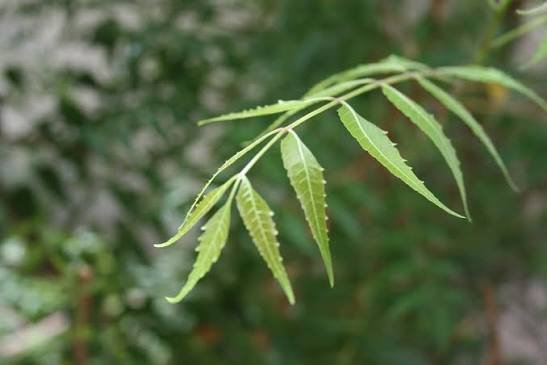
- The leaves are compound and alternate, usually about 20–38 cm long. Individual leaflets have serrated or deeply cut margins and are glossy green when mature. Young leaves may have a reddish or reddish-purple tint and possess a distinctly bitter taste.
🫒 Fruits of Neem
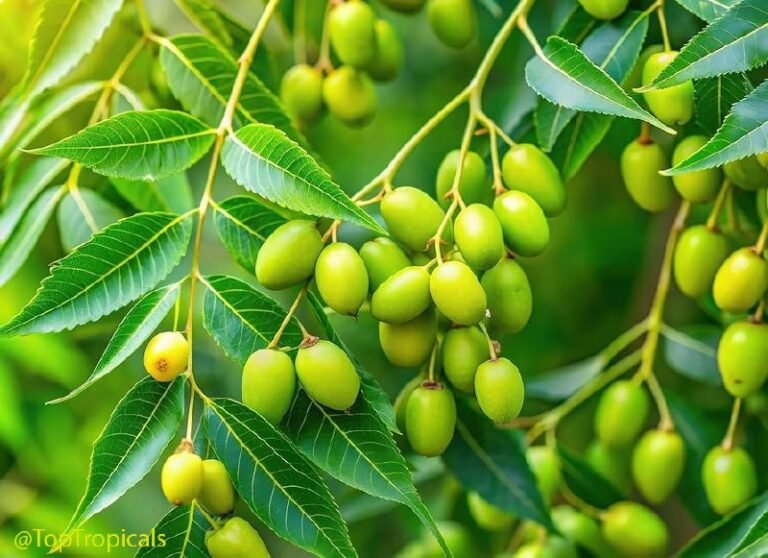
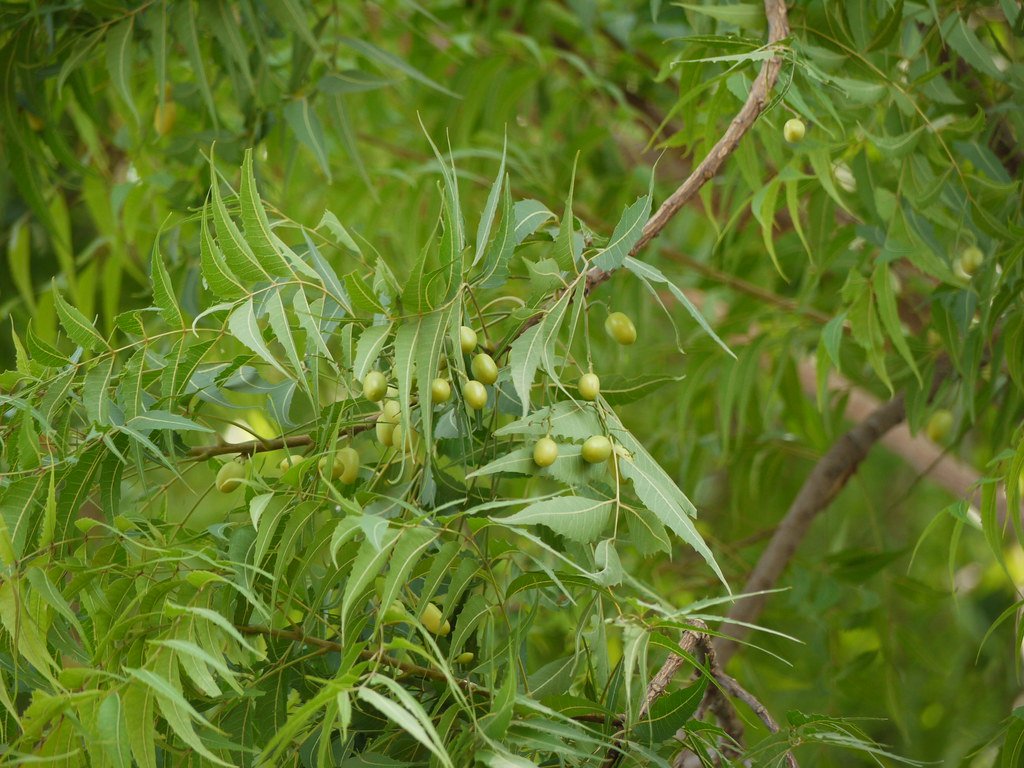
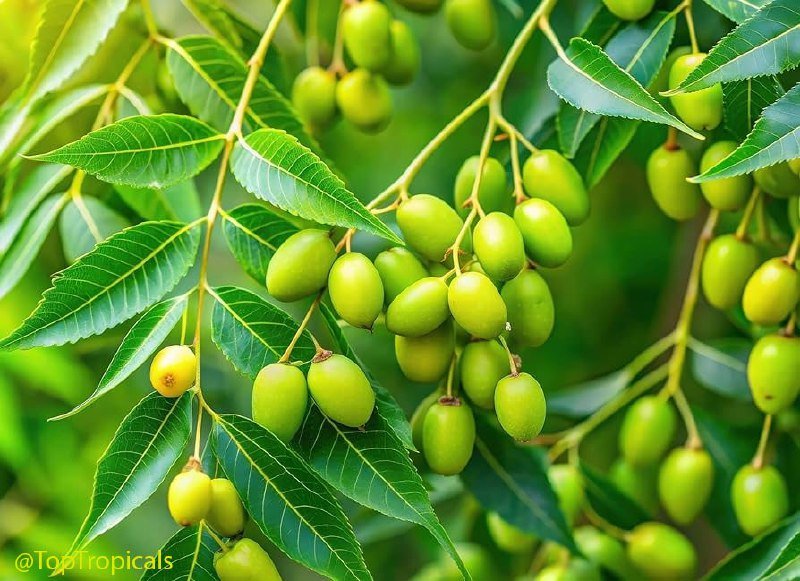
- The fruits are smooth and oval to elongated, about 1.3–1.8 cm long. They are green when unripe and turn yellow or yellowish-green when mature, with a fleshy outer portion surrounding the seed.
🌸 Flowering Season of Neem
- Mainly March to April.
🍈 Fruiting Season of Neem
- Mainly June to August.
🌿 Branches of Neem
- The branches are widely spreading and form a dense, rounded or broad crown.
🌼 Flowers of Neem
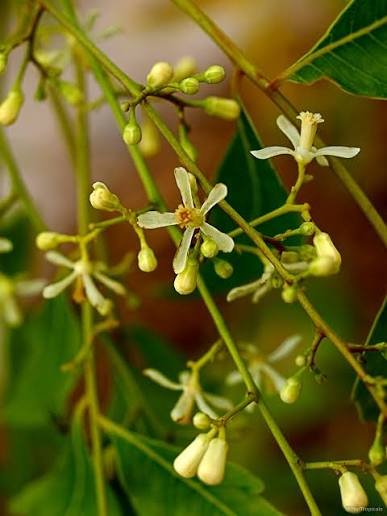
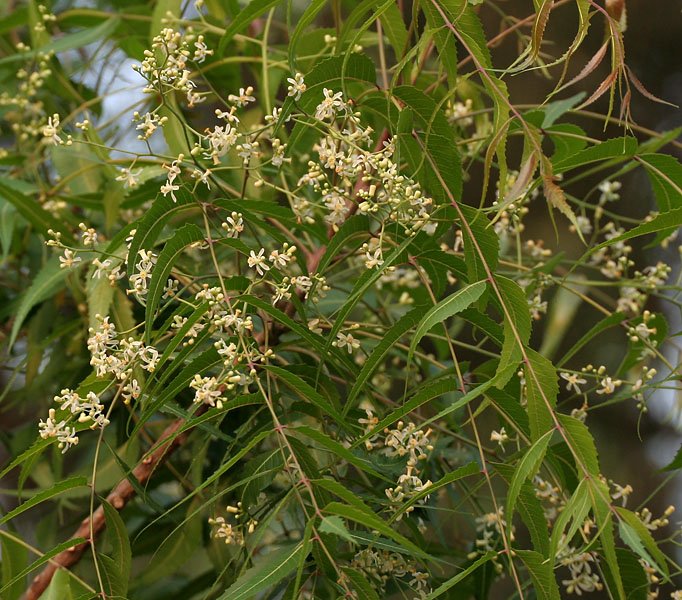
- The flowers are small, approximately 6–8 mm long, and generally greenish-white to pale yellow. They are arranged in clusters and have a pleasant, honey-like fragrance.
🌰 Seeds of Neem
- Each fruit generally contains a single seed. The seed is pointed, oval-shaped, relatively thick and fleshy, and contains a significant amount of oil.
🌱 Root System of Neem
- Neem develops a strong root system with a prominent primary root and spreading lateral roots, helping it tolerate relatively dry conditions.
Nutritional Value of Margosa Tree
Neem (Azadirachta indica) is primarily valued as a medicinal and functional plant, rather than as a conventional food. Its leaves, seeds, bark, flowers, fruits, and oil contain a variety of naturally occurring bioactive compounds, although their nutritional composition differs considerably between plant parts.
| Plant Part | Notable Nutritional / Bioactive Components |
|---|---|
| Neem Leaves | Fiber, minerals, polyphenols, flavonoids, and other phytochemicals |
| Neem Seeds | Fixed oil, fatty acids, proteins, and bioactive limonoids |
| Neem Oil | Fatty acids and limonoids such as azadirachtin-related compounds |
| Neem Flowers | Carbohydrates, proteins, minerals, and various phytochemicals |
| Neem Fruits | Carbohydrates, fiber, minerals, and bioactive compounds |
| Neem Bark | Tannins, polyphenols, and other plant-derived phytochemicals |
Key Nutritional Components
Neem contains several classes of naturally occurring compounds, including polyphenols, flavonoids, tannins, terpenoids, limonoids, fatty acids, proteins, fiber, and minerals. Among these, limonoids such as azadirachtin, nimbin, and salannin are particularly well known in scientific research on neem.
Important: Neem is not generally consumed as a regular nutritional food, and concentrated neem preparations or neem oil should not be treated as dietary supplements without appropriate safety guidance.
Chemical Composition of Margosa Tree
- Neem (Azadirachta indica) contains a diverse range of bioactive compounds, phytochemicals, fatty acids, sterols, tannins, glycosides, amino acids, minerals, and other naturally occurring constituents. The chemical composition varies considerably between the bark, leaves, flowers, fruits, seeds, roots, wood, and oil.
| Plant Part | Major Reported Chemical Constituents |
|---|---|
| Wood | Tannins, β-sitosterol, oils, glycosides, nimaton, nimbinin, nimbolin and other compounds |
| Bark | Tannins, campesterol, stigmasterol, sitosterol, β-amyrin, lupeol, nimbin, vanillic acid, catechol, nimbidin, nimbinin, sugiol, kulinol and related compounds |
| Leaves | Nimbin, nimbinin, nimbendiol, nimbolide and quercetin |
| Mature Leaves | Proteins, fats, carbohydrates, calcium, phosphorus, iron, fiber, minerals, thiamine, niacin, carotenoids and amino acids including glutamic acid, tyrosine, aspartic acid, alanine, proline and glutamine |
| Fruit | Gedunin, azadiradione, azadirone, azadirachtin and azadirachtol |
| Flowers | β-sitosterol, kaempferol, margocine, azadirachtin and fatty acids |
| Roots | Cycloeucalenone and vanillic acid |
| Seeds | Neem limonoids, fixed oil, fatty acids and other bioactive constituents |
| Neem Oil | Mainly fatty acids including palmitic, oleic, stearic, linoleic and arachidic acids, along with limonoids and other minor constituents |
| Neem Gum | Complex polysaccharide-type gum containing various sugars and other constituents |
- Major Bioactive Compounds
- Some of the best-known phytochemicals associated with neem include azadirachtin, nimbin, nimbidin, nimbolide, salannin, gedunin, quercetin, β-sitosterol, lupeol, and various limonoids. These compounds are among the major reasons neem has attracted extensive interest in phytochemical, agricultural, antimicrobial, and pharmacological research.
- Neem Seed Oil
- Neem seeds can yield a substantial amount of fixed (non-volatile) oil. Its fatty-acid profile commonly includes oleic, linoleic, palmitic, stearic, and arachidic acids. Neem seed oil also contains characteristic limonoids, including azadirachtin, nimbin, and salannin, which are particularly important in research on neem’s natural insect-repellent and insecticidal properties.
- Note: The concentration of individual compounds can vary depending on the plant part, geographical origin, season, maturity, extraction method, and analytical technique.
Ayurvedic Properties of Margosa Tree
- In Ayurveda, Neem (Azadirachta indica) is traditionally described as cooling and dry by Raj Nighantu, while Sushruta describes it as heating, dry and pungent in post-digestive effect. It is traditionally considered Kapha-reducing, Pitta-calming, wound-healing, antiparasitic, swelling-reducing and soothing for burning sensations. Neem leaves are described as bitter, pungent after digestion and beneficial for balancing Pitta-related conditions, while tender leaves are considered astringent and drying.
- Different parts of Neem have distinct traditional properties. Flowers are bitter and Pitta- and Kapha-balancing; unripe fruits are bitter, pungent, oily, light and heating, while ripe fruits are sweet, pungent and oily. Bark is bitter, astringent and Kapha-reducing; seeds are traditionally described as laxative and antiparasitic; and Neem oil is traditionally regarded as cleansing and beneficial for skin health. Overall, Neem is characterized in Ayurveda as a bitter, dry, cleansing and versatile medicinal plant.
Cultivation & Growing of Margosa Tree
☀️ Climate
- Neem grows best in warm tropical and subtropical climates with plenty of sunlight. It is highly drought-tolerant once established and performs well in areas with moderate to low rainfall.
🌱 Soil
- Neem prefers well-drained sandy, loamy or moderately fertile soils. It can also grow in relatively poor and dry soils, but waterlogged soil should be avoided.
🌡️ Temperature
The ideal temperature range is approximately 20–35°C. Young plants are more sensitive to cold, while mature Neem trees can tolerate hot and dry conditions.
💧 Water Requirements
- Young Neem plants need regular watering during establishment. Mature trees require comparatively little water and can survive extended dry periods.
🌰 Propagation
Neem is mainly propagated through fresh seeds. Seeds should preferably be sown soon after collection because their viability decreases during storage.
☀️ Sunlight
- Neem requires full sunlight for healthy growth and develops best when planted in an open, sunny location.
🌳 Growth
Neem is a fast-growing, hardy and low-maintenance evergreen tree. With suitable conditions, it develops a strong root system and a broad, spreading crown.
scientific research of Margosa Tree
👨⚕️ Human Studies
- S. Biswas and colleagues reviewed clinical and pharmacological research on Neem and reported that human studies have investigated its potential in conditions such as oral health, gastric ulcers, diabetes and skin disorders. One controlled clinical study by G. G. B. U. Kumar and colleagues evaluated an aqueous Neem leaf-and-twig extract for 12 weeks in adults with elevated blood glucose, using a randomized, double-blind, placebo-controlled design. The study investigated whether Neem could improve metabolic and endothelial parameters alongside standard metformin therapy.
🐀 Animal Studies
- R. V. Priyadarsini, P. Manikandan, G. H. Kumar and S. Nagini studied Neem compounds azadirachtin and nimbolide in hamsters with chemically induced oral cancer. The researchers found that these compounds reduced tumor development and influenced oxidative DNA damage, antioxidant enzymes, detoxification pathways, tumour invasion and angiogenesis.
🧫 Laboratory & In-Vitro Research
R. V. Priyadarsini, R. Senthil Murugan, P. Sripriya, D. Karunagaran and S. Nagini tested Neem limonoids azadirachtin and nimbolide on human cervical cancer (HeLa) cells. Both compounds reduced cell viability and triggered cell-cycle arrest and apoptosis, involving mitochondrial pathways, p53/p21 signalling and inhibition of NF-κB activity.
Molay Kumar Roy and colleagues tested nimbolide extracted from Neem flowers against several cancer cell lines, including U937, HL-60, THP-1 and B16 cells. Nimbolide inhibited cell growth and induced changes associated with apoptosis and cell-cycle disruption.
📊 Overall Evidence
- Neem has been extensively investigated, with more than 1,000 research articles and over 300 identified constituents reported in a major scientific review. However, much of the evidence remains laboratory or animal-based, and stronger, larger human clinical trials are still needed before Neem or its isolated compounds can be considered established medical treatments.
Medicinal Uses of Margosa Tree
🧠 Head & Hair Disorders
- 1. Premature Greying of Hair: Neem seeds are given multiple Bhavana (triturations) with Bhringraja juice and a decoction of Asana bark, after which the oil is extracted by the traditional method. 2 drops in each nostril as Nasya is traditionally advised, along with a diet consisting only of milk and rice, for premature greying of hair.
- 2. Premature Greying of Hair: Traditionally, 2 drops of Neem seed oil in each nostril as Nasya and consumption of only cow’s milk are advised for premature greying.
- 3. Blackening of Hair: Neem seeds are given several Bhavana with the juices of Bhringraja and Vijaysara, followed by oil extraction. 2 drops in each nostril as Nasya, along with only milk and rice in the diet, are traditionally described for turning grey hair black.
- 4. Hair Care: Neem leaves and Jujube leaves are taken in equal parts, finely ground and applied as a paste to the scalp. Wash after 1–2 hours.
- 5. Hair Fall: Neem leaves are boiled thoroughly in water. After cooling, the water is used to wash the head regularly. Traditionally, this is described as strengthening the hair, reducing hair fall and benefiting several scalp disorders.
- 6. Scalp Itching, Pimples & Lice: For scalp itching, small pustules, pus formation or itching conditions such as Arushika and Kshudra-roga, the scalp is washed with Neem decoction followed by daily application of Neem oil. Grinding Neem seeds and applying them, or washing the scalp with Neem-leaf decoction, is traditionally described for killing head lice and nits.
- 7. Headache / Migraine: Dried Neem leaves, black pepper and rice are taken in equal parts, finely powdered and 1–2 drops are traditionally put into the nostril on the same side as the pain before sunrise for chronic migraine.
- 8. Headache: Neem oil is traditionally applied to the forehead for relief from headache.
👃 Nasal Disorders
1. Nosebleed: Neem leaves and carom seeds (Ajwain) are ground together in equal parts and applied as a paste to the temples. Traditionally, this is described for stopping nosebleeds.
👂 Ear Disorders
- 1. Ear Discharge: Neem-leaf juice is mixed with an equal quantity of honey. After properly cleaning the ear, 2 drops are traditionally put into the ear morning and evening.
- 2. Pus Discharge from Ear: Honey is mixed with Neem oil, and a cotton wick soaked in the preparation is traditionally placed in the ear.
- 3. Ear Discharge: 40 ml Neem oil and 5 g wax are heated until the wax melts. 750 mg powdered roasted alum is thoroughly mixed into it and stored in a bottle. After cleaning the ear, 3–4 drops twice daily are traditionally used.
- 4. Ear Discharge: 40 ml Neem-leaf juice is cooked with 40 ml sesame oil until only the oil remains. It is filtered and 3–4 drops are traditionally put into the ear.
🫁 Chest & Respiratory Disorders
1. Tuberculosis (Yakshma): 4 drops of Neem oil, three times daily, are traditionally filled into capsules and administered.
2. Asthma: 3–6 drops of purified Neem seed oil are traditionally placed in betel leaf and taken orally for respiratory disorders.
🚽 Rectal Disorders & Hemorrhoids
- 1. Hemorrhoids: 50 ml Neem oil, 3 g raw alum and 3 g borax (Suhaga) are finely ground and mixed. After cleansing following bowel movement, the preparation is traditionally applied with a finger inside the anus.
- 2. Hemorrhoids: Dried kernels of Neem and Bakayan seeds, small Haritaki and purified Rasaut, 50 g each, together with 5 g ghee-fried asafoetida, are powdered. 50 g seedless raisins are triturated into the mixture and 500 mg tablets are prepared. 1–2 tablets twice daily with goat’s milk or fresh water are traditionally described for different types of hemorrhoids.
- 3. Hemorrhoids: 1–2 g finely powdered dried ripe Neem fruit with its peel is traditionally taken in the morning with stale water. Ghee should be used during the course according to the traditional source.
- 4. Hemorrhoids: Neem seed kernel, Aloe resin (Elua) and Rasaut are mixed in equal parts, triturated and made into tablets. 1 tablet every morning with buttermilk is traditionally used.
- 5. Hemorrhoids: 2–5 drops of Neem kernel are traditionally taken with sugar or filled into a capsule and swallowed. During use, only milk and rice are traditionally advised as food.
🫀 Liver & Spleen Disorders
- 1. Anemia & Jaundice: 1 g fine Neem Panchanga powder is mixed with 5 g ghee and 10 g honey and traditionally taken. If ghee and honey are unsuitable, 1 g Panchanga powder may traditionally be taken with cow’s urine, water or milk.
- 2. Anemia: Neem twigs 6 g and white Punarnava root 6 g are ground with water, filtered and traditionally given for several days.
- 3. Anemia: Neem leaves, Guduchi leaves, Guma leaves and small Haritaki, 6 g each, are crushed and boiled in 200 ml water until 50 ml remains. After filtering, 10 g jaggery is added and traditionally taken morning and evening. Before taking this decoction, 200 mg Shilajit is traditionally licked with 6 g honey.
- 4. Jaundice: If jaundice is traditionally attributed to obstruction of the bile duct, 10–20 ml Neem-leaf juice is mixed with 3 g dry ginger powder and 6 g honey and traditionally given in the morning for 3 days. Ghee, oil, sugar and jaggery are avoided, while curd and rice are traditionally advised.
- 5. Liver & Spleen Disorders: Dried Neem leaves, Neem root bark, flowers and fruits are taken in equal parts, finely powdered and 1 g twice daily is traditionally mixed with ghee and honey and taken with cow’s urine, water or milk.
♀️ Reproductive System Disorders
- 1. Breast Abscess / Breast Ulcer: 25 g Neem leaves are cooked in 50 ml mustard oil and triturated. The wound is washed with Neem decoction, after which the oil containing the ash is applied and dry ash is sprinkled over it before bandaging. Traditionally, considerable relief is described within 2–3 days. Afterwards, the wound is washed daily with Neem decoction and Neem oil is applied.
- 2. Vaginal Pain: Ripe Neem fruits are ground with Neem-leaf juice and made into tablets. A tablet is traditionally wrapped inside cloth with a thread attached and inserted into the vaginal canal daily.
- 3. Vaginal Pain: Neem seed kernels and castor seed kernels, together with Neem-leaf juice, are triturated in equal parts, made into a wick and traditionally inserted into the vagina.
- 4. Menstrual Disorders: 20 g coarsely crushed Neem bark, 6 g carrot seeds, 6 g Palash seeds, 20 g black sesame seeds and 20 g old jaggery are boiled in an earthen vessel with 300 ml water until 100 ml remains. After filtering, it is traditionally given for 7 days. It should not be given to pregnant women.
- 5. Delayed Menstruation: 4 g Neem bark and 20 g old jaggery are boiled in 300 ml water until 100 ml remains, then filtered and traditionally given for delayed menstruation.
- 6. Vaginal Laxity: Neem bark is washed repeatedly in water, and cotton is soaked in this water and traditionally placed in the vagina daily. The remaining bark is dried, burned and used for fumigation around the vaginal opening. Repeated washing with Neem water is also traditionally described.
- 7. Vaginal Discharge: Neem bark and Babool bark are taken in equal amounts and prepared as a decoction. 10–30 ml morning and evening is traditionally used for leucorrhea.
- 8. Vaginal Discharge: 10 g Neem bark is ground with an equal quantity of Guduchi and mixed with 2 teaspoons honey. Traditionally given three times daily for Kapha-type and blood-associated vaginal discharge.
- 9. Postpartum Disorders: 3–6 g Neem seed powder is traditionally used in difficult childbirth and postpartum disorders. Powder of dried Neem fruits may also be tempered with pulses and vegetables as a traditional preparation.
- 10. Postpartum Retained Blood: 10–20 ml Neem bark decoction is traditionally given morning and evening for 6 days to remove retained impure blood after childbirth.
- 11. Postpartum Disorders: 6 g Neem bark is ground with water, mixed with 20 g ghee and traditionally given with fermented rice water (Kanji).
- 12. Syphilis: 20 g Neem bark is coarsely crushed and added to 1 litre boiling water, left overnight and filtered in the morning. 50 ml is traditionally given orally, while the remaining water is used to clean syphilitic ulcers. The traditional dietary regimen consists only of ghee, sugar candy and thin wheat roti.
- 13. Urinary Disorder (Sikta-meha): 10–20 ml Neem bark decoction is traditionally taken regularly in the morning.
- 14. Gonorrhea: 40 g Neem bark is coarsely crushed and boiled with 22 litres water in an earthen vessel until 200 ml remains. It is filtered and boiled again while 20–25 g potassium nitrate powder (Kali Shora) is gradually added and stirred with Neem wood. After drying, it is powdered and filtered. 250 mg daily with cow’s milk buttermilk is traditionally described.
- 15. Contraception: A cotton plug soaked in purified Neem oil is traditionally placed inside the vagina before sexual intercourse to prevent conception.
👁️ Eye Disorders
- 1. Eye Pain: For pain in one eye, warmed juice of tender Neem leaves is traditionally put 2 drops into the ear on the opposite side. If both eyes are painful, it is put into both ears.
- 2. Eye Inflammation & Pain: Neem leaves and Lodhra are powdered in equal parts and tied in a cloth pouch. The pouch is soaked in water, and this water is traditionally used for eye disorders such as inflammation and pain.
- 3. Swelling, Pain & Itching of the Eyes: Neem leaves and dry ginger are ground together with a small amount of rock salt, slightly warmed and placed on a cloth bandage at night. Traditionally, it is used for 2–3 days. During this period, the eyes should be protected from cold water and cold air.
- 4. Eye Itching & Burning: 500 g Neem leaves are placed between two earthen vessels and burned in a cow-dung-cake fire. After completely cooling, the ash is ground with 100 ml lemon juice and dried. The resulting preparation is traditionally used as collyrium for eye itching and burning.
- 5. Eye Itching, Burning, Redness & Blurred Vision: 50 g Neem leaves are finely ground with water and made into a tablet, then cooked in mustard oil. When completely charred, the material is ground again in the same oil, with one-tenth part camphor and one-tenth part potassium nitrate (Kali Shora). It is stored in a glass bottle. Traditionally, it is applied to the eyes as collyrium at night, followed by washing with Triphala water in the morning.
- 6. Blurred Vision & Eye Film: 20 Neem buds, 20 g zinc ash (Jasta Bhasma), 6 cloves, 6 small cardamoms and 20 g rock sugar are finely powdered, sieved and prepared as Surma. Traditionally, it is applied with an applicator morning and evening.
- 7. Eye Irritation, Watering & Redness: 10 g clean cotton is spread out and covered with 20 dried Neem leaves. 1 g camphor powder is sprinkled over it, the cotton is rolled into a wick, soaked in 10 g cow’s ghee and burned to prepare Kajal. Traditionally, this Kajal is applied to the eyes at night for eye irritation, watering and redness and is described as especially beneficial for children.
- 8. Thickened Eyelids & Itching: In Vamani (Salaka-roga), traditionally described as a condition involving thickened eyelids, itching, falling eyelashes and redness of the eyelid margins, concentrated Neem-leaf juice is used as collyrium.
🦷 Oral & Dental Disorders
- 1. Dental Disorders: Neem twigs are traditionally used as a chewing stick (Datun) for maintaining oral and dental health.
- 2. Gum & Oral Disorders: 50 g Neem root bark powder, 50 g red ochre (Gairika) and 10 g rock salt are thoroughly triturated together. Three Bhavana are given with Neem-leaf juice and the preparation is dried and stored. Traditionally used as a tooth powder for bleeding gums, pus discharge, mouth ulcers, bad breath and nausea.
- 3. Dental Disorders: 100 g Neem root is coarsely crushed and boiled in ½ litre water until one-fourth remains. The filtered decoction is traditionally used as a Gandusha (mouth rinse).
🥣 Digestive & Abdominal Disorders
- 1. Intestinal Worms: A combined powder of Neem inner bark, Indrayava and Vidanga, 1½ g, together with 250 mg roasted asafoetida, is mixed with honey and traditionally taken twice daily for intestinal worms.
- 2. Intestinal Worms: 8–10 Neem leaves are traditionally tempered with eggplant or another vegetable and eaten to eliminate intestinal worms.
- 3. Intestinal Worms: Juice of young Neem leaves is traditionally given orally in a dose of 5 ml.
- 4. Hyperacidity: Neem twigs, coriander, dry ginger and sugar, 6 g each, are combined and prepared as a decoction. Traditionally taken morning and evening for sour belching, indigestion and excessive thirst. It is also traditionally described for Pitta-type fever.
- 5. Hyperacidity: Fine Neem Panchanga powder 1 part, Vidara powder 2 parts and Sattu 10 parts are mixed. An appropriate quantity is traditionally taken with honey for hyperacidity.
- 6. Abdominal Pain: 40–50 g inner bark from the thick trunk of a Neem tree is pounded with barley and boiled in 400 ml water, with 10 g salt added. When half remains, it is filtered and traditionally given warm.
- 7. Diarrhea: 50 g coarsely crushed Neem inner bark is boiled in 300 ml water for half an hour and filtered. The filtered bark is then boiled again in 300 ml water until 200 ml remains, then filtered. The second decoction is mixed with the first, and 50 ml three times daily is traditionally given.
- 8. Ama-Diarrhea: 125–250 mg inner-bark ash is traditionally taken with 10 ml curd twice daily.
- 9. Bloody Diarrhea: Traditionally, 3–4 ripe Neem fruits are eaten every morning.
- 10. Weak Digestion: Traditionally, 3–4 ripe Neem fruits are eaten to stimulate digestive fire.
🚻 Urinary & Genitourinary Disorders
- 1. Prameha & Gonorrhea: Neem leaves are ground into a tablet, fried in a small quantity of cow’s ghee until the tablet burns, and the ghee is filtered. Traditionally, the preparation is taken with roti.
- 2. Urinary Disorders: 10 ml Neem-leaf juice with honey is traditionally taken daily. Alternatively, 20 ml Neem-leaf juice is triturated with 1 g Nilathotha, dried and calcined in cowries. 250 mg of the resulting preparation is traditionally taken twice daily with cow’s milk.
- 3. Urinary Stones: 500 mg ash of Neem leaves is traditionally taken with water three times daily for several days.
- 4. Urinary Stones: 2 g Neem leaves are ground and filtered with 50–100 ml water and traditionally given morning, afternoon and evening for one and a half months.
🦴 Bone & Joint Disorders
- 1. Gout / Vatarakta: 20 g Neem leaves and 20 g bitter pointed-gourd leaves are boiled in 300 ml water until one-fourth remains. Honey is added and traditionally taken morning and evening. Neem leaves are also traditionally boiled in Kanji or buttermilk, ground and applied externally.
- 2. Rheumatoid-Type Joint Pain: 20 g Neem inner bark is finely ground with water and applied as a thick paste to the painful area. After drying, it is removed and reapplied. Traditionally, relief is described after 3–4 applications.
- 3. Paralysis & Arthritis: 10–20 drops Neem bark extract are traditionally taken for 2–4 days. Two hours later, freshly prepared roti with ghee is taken as food.
- 4. Arthritis: Massage with Neem seed oil is traditionally used for joint pain and arthritis.
- 5. Spasms & Vata Disorders: A few drops of Neem seed oil are traditionally applied to betel leaf and taken orally. 30 drops are also traditionally added to Rasnadi decoction and taken for spasms and various Vata-related disorders.
.🦵 Limb / Peripheral Disorders
1. Elephantiasis (Shleepada): 10 g Neem bark and 10 g Khair extract are ground and filtered with 50 ml cow’s urine, then 6 g honey is added. Traditionally taken morning, afternoon and evening.
🧴 Skin Disorders
- 1. Smallpox: 7 tender reddish Neem leaves and 7 black peppercorns are traditionally taken regularly for 1 month, with the classical source claiming protection from smallpox for 1 year.
- 2. Smallpox Prevention: Neem seeds, Baheda seeds and turmeric are taken in equal parts, ground and filtered with cool water, and traditionally taken for several days to prevent smallpox.
- 3. Smallpox Prevention: 3 g Neem buds are traditionally eaten continuously for 15 days, with the classical source describing protection from smallpox for 6 months.
- 4. Burning in Smallpox Lesions: If smallpox lesions are excessively hot, 10 g tender Neem leaves are ground, diluted considerably with their juice and applied as a thin paste. A thick application is traditionally advised against.
- 5. Burning of Smallpox Lesions: 5–10 Neem seed kernels are ground with water and traditionally applied to reduce burning of smallpox lesions.
- 6. Excessive Thirst & Fever in Smallpox: Neem bark is burned and its embers are extinguished in water. The water is filtered and traditionally given to the patient. If thirst is not relieved, 10 g tender Neem leaves are boiled in 1 litre water until half remains, then filtered and given. Traditionally, this is described as reducing thirst, the severity of fever and the toxic effects of smallpox, while helping the lesions dry sooner.
- 7. Severe / Incompletely Manifested Smallpox: If the smallpox does not fully erupt and the patient becomes restless, agitated or delirious, 10 ml fresh Neem-leaf juice morning, afternoon and evening is traditionally advised.
- 8. After Recovery from Smallpox: After recovery, bathing with Neem-leaf decoction is traditionally recommended.
Frequently Asked Questions (FAQs)
1. What are the benefits of Neem (Margosa Tree)?
2. What is Neem Tree (Azadirachta indica) used for?
- Neem (Azadirachta indica), also known as the Margosa Tree or Indian Lilac, has been traditionally used for skin care, oral hygiene, scalp and hair care, wound care, and insect protection. Modern research has also investigated its antimicrobial, anti-inflammatory, antioxidant, and other biological properties, although the strength of evidence varies by preparation and condition.
- The Neem Tree has a long history of traditional use in South Asian medicine and everyday health practices. Different parts of the plant—including leaves, bark, flowers, fruits, seeds, and neem oil—have traditionally been used for skin, dental, digestive, respiratory, and other health-related purposes.
3. Is Margosa Tree good for skin?
4. Is Neem good for hair and dandruff?
- Margosa Tree leaves, bark, and oil are traditionally used for skin care. Neem contains several bioactive compounds that have demonstrated antimicrobial and anti-inflammatory activity in laboratory research. However, evidence from human clinical studies is limited for many specific skin conditions, so neem should not be considered a proven cure.
- Neem is widely used in traditional scalp and hair care, particularly for dandruff and scalp hygiene. Some neem compounds have antimicrobial activity that may be relevant to scalp health, but strong clinical evidence that neem promotes hair growth or permanently treats dandruff is still limited.
5. Can Neem help with blood sugar?
6. What are the benefits of Neem leaves?
- Research has investigated Azadirachta indica extracts for their potential effects on blood glucose. Some human and laboratory studies have reported promising findings, but results depend on the type and dose of neem preparation. Neem should not replace prescribed diabetes medication or medical care.
- Neem leaves are among the most commonly used parts of the Margosa Tree. Traditionally, they have been used for skin care, oral hygiene, digestive health, wound care, and other purposes. Neem leaves contain compounds such as nimbin, nimbolide, quercetin, and other limonoids that are being studied for their biological activities.
7. What is Neem oil used for?
8. What are the side effects of Neem (Indian Lilac)?
- Neem oil, obtained mainly from the seeds of Azadirachta indica, is traditionally and commercially used for skin and hair products, soaps, cosmetics, and natural insect control. It contains fatty acids and bioactive limonoids, including compounds associated with insect-repellent and insect-growth-regulating activity.
- Side effects depend on the part of the plant, preparation, concentration, and route of use. Topical neem products may cause irritation or allergic reactions in sensitive individuals. Ingesting concentrated neem products, particularly neem oil, can cause serious toxicity, and neem oil poisoning has been reported especially in children.
9. Is Neem safe to use during pregnancy?
10. What is the scientific name and family of the Margosa Tree?
- The safety of medicinal or concentrated Neem preparations during pregnancy has not been adequately established. Because some experimental research has raised concerns about reproductive toxicity, pregnant people should avoid oral medicinal neem products unless specifically advised by a qualified healthcare professional.
- The scientific name of the Margosa Tree is Azadirachta indica (L.) A. Juss. It belongs to the Meliaceae family. Other common English names include Neem Tree, Neem, Margosa Tree, and Indian Lilac.
Back To Home

Ayuage is a trusted platform dedicated to sharing practical, easy-to-understand, and reliable insights on health, nutrition, wellness, and healthy living. Our goal is to simplify important health topics and provide readers with helpful information that supports smarter food choices and a balanced lifestyle.