All About Coconut (Cocos nucifera): Uses, Benefits, Properties & Plant Guide
Introduction
- Coconut (Cocos nucifera Linn.) is one of the most remarkable, versatile, and valuable tropical plants known for its wide range of traditional, nutritional, cultural, and commercial uses. It is widely cultivated in tropical and coastal regions, where its fruit, coconut water, kernel, milk, oil, husk, and shell are used for various purposes. Because almost every part of the coconut palm has practical value, it is often regarded as one of the most useful tropical plants.
- Coconut is believed to have originated in the tropical regions of the Pacific Islands and parts of Southeast Asia, and it is now extensively cultivated in countries such as India, Sri Lanka, Myanmar, Indonesia, the Philippines, and other tropical regions. In India, coconut cultivation is particularly important in Kerala, Odisha, West Bengal, Maharashtra, Gujarat, and several southern states.
- Beyond its nutritional and economic importance, coconut holds a special and deeply respected place in Indian culture and religious traditions. It is commonly offered during पूजा and auspicious ceremonies and is traditionally known as “Shrifal” or “fruit of prosperity.” According to Hindu mythology, a fascinating traditional story associates the origin of the coconut with the sage Vishwamitra.
- With its exceptional versatility, cultural significance, and diverse traditional uses, coconut remains an important plant in tropical agriculture and everyday life. Its botanical characteristics, nutritional composition, traditional uses, and scientifically studied properties make Cocos nucifera an interesting subject for further exploration.
Discovery of Coconut
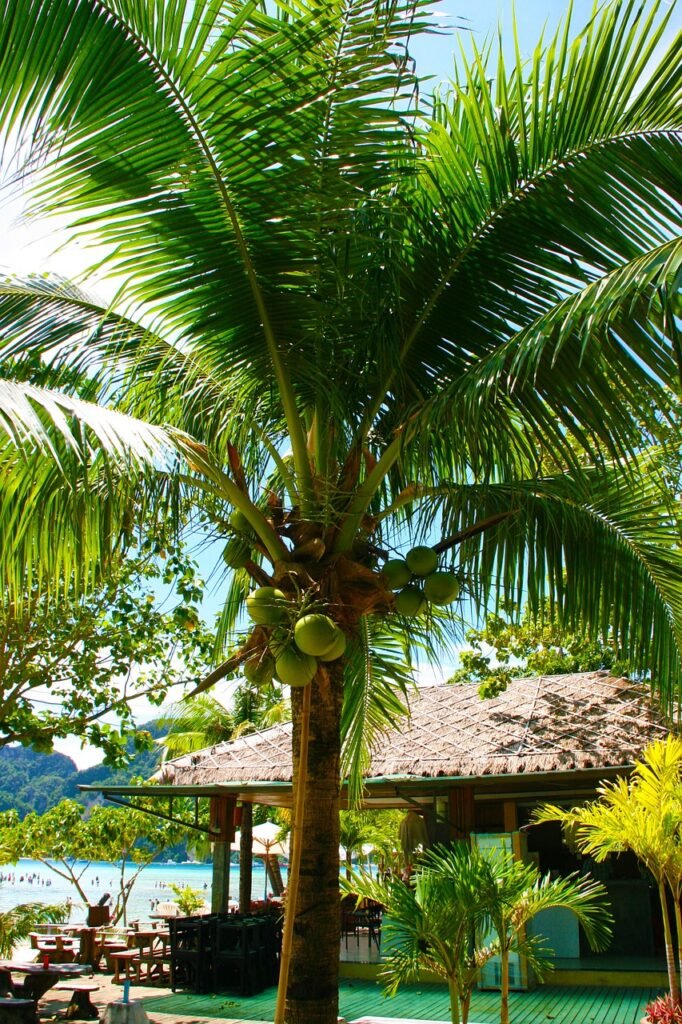
- Coconut (Cocos nucifera Linn.) is believed to have originated in the tropical Indo-Pacific region, particularly in areas around Southeast Asia, the Pacific Islands, and the Indian Ocean. Due to its ability to float across oceans and germinate after long periods in seawater, coconut gradually spread naturally along tropical coastlines and islands.
- The early history of coconut is closely associated with coastal communities of Southeast Asia and the Pacific Islands, where the plant became an important source of food, drinking water, fiber, oil, and other useful products. Over centuries, coconut cultivation expanded through tropical regions of South Asia, Southeast Asia, Africa, and the Pacific, largely through human migration, trade, and natural dispersal.
- Today, coconut is one of the most important tropical fruit and oil-producing crops in the world. It is extensively cultivated in countries such as India, Indonesia, the Philippines, Sri Lanka, Thailand, and Myanmar. The coconut palm is particularly well adapted to warm, humid climates and sandy coastal soils, making it an important plant in tropical agriculture and traditional livelihoods.
- Because of its wide range of uses, coconut has been cultivated and traded for centuries and is now grown throughout many tropical and subtropical regions. Its historical spread and economic importance have made Cocos nucifera one of the most widely recognized and useful palm species in the world.
Powerful History of Coconut
- Coconut (Cocos nucifera Linn.) is believed to have originated in the tropical Indo-Pacific region, particularly in areas around Southeast Asia, the Pacific Islands, and the Indian Ocean. Due to its ability to float across oceans and germinate after long periods in seawater, coconut gradually spread naturally along tropical coastlines and islands.
- The early history of coconut is closely associated with coastal communities of Southeast Asia and the Pacific Islands, where the plant became an important source of food, drinking water, fiber, oil, and other useful products. Over centuries, coconut cultivation expanded through tropical regions of South Asia, Southeast Asia, Africa, and the Pacific, largely through human migration, trade, and natural dispersal.
- Today, coconut is one of the most important tropical fruit and oil-producing crops in the world. It is extensively cultivated in countries such as India, Indonesia, the Philippines, Sri Lanka, Thailand, and Myanmar. The coconut palm is particularly well adapted to warm, humid climates and sandy coastal soils, making it an important plant in tropical agriculture and traditional livelihoods.
- Because of its wide range of uses, coconut has been cultivated and traded for centuries and is now grown throughout many tropical and subtropical regions. Its historical spread and economic importance have made Cocos nucifera one of the most widely recognized and useful palm species in the world.
Coconut in your language
| Name/Term | Language/Country | Local Name |
|---|---|---|
| Coconut in English | 🇬🇧 English (Worldwide) | Coconut, Coconut Palm, Coconut Tree |
| Coconut in Hindi | 🇮🇳 Hindi (India) | नारियल (Nariyal), नारिअल (Narial), गोला (Gola), गरी (Gari), गिरी (Giri) |
| Coconut in Sanskrit | 🇮🇳 Sanskrit (India) | नारिकेलः (Narikelah), महाफलः (Mahaphalah), दृढ़फलः (Dridhaphalah), कूर्चशीर्षकः (Kurchashirshakah), तुङ्गः (Tungah), स्कन्धफलः (Skandhaphalah), तृणराजः (Trinarajah), सगाफलः (Sagaphalah), दक्षिणात्मकः (Dakshinatmakah), सदापुष्पः (Sadapushpah), शिरःफलः (Shirahphalah), पुटोदकः (Putodakah), रसफलः (Rasaphalah), नीलतरुः (Nilataruh), दुरारुहः (Duraruhah), दक्षिणात्यः (Dakshinatayah), शिराफलः (Shiraphalah), पयोधरः (Payodharah), कौषिकुलः (Kaushikulah), फलमुण्डः (Phalamundah), जटाफलः (Jataphalah), मुण्डफलः (Mundaphalah), यक्षफलः (Yakshaphalah) |
| Coconut in Odia | 🇮🇳 Odia (India) | ନରିଆଳ (Nariyal), ଗୋଟୋମା (Gotoma) |
| Coconut in Urdu | 🇮🇳 India / 🇵🇰 Pakistan | نارجیل (Narjil), ناریل (Nariyal) |
| Coconut in Konkani | 🇮🇳 Konkani (India) | माद्द (Madd) |
| Coconut in Kannada | 🇮🇳 Kannada (India) | ಕೊಬ್ಬರಿ (Khobbari), ಗೀತಕ (Geetak), ನಾರಿಕೆಳ (Naarikela) |
| Coconut in Gujarati | 🇮🇳 Gujarati (India) | શ્રીફળ (Shriphal), કોપરું (Koprun), નાળિયેર (Naliyer), નારિયેળ (Nariel) |
| Coconut in Tamil | 🇮🇳 India / 🇱🇰 Sri Lanka | தேங்காய் (Tenkai), கொட்டப்பரை (Kotparai), கேலி (Keli), நாரிகேலம் (Narigelam) |
| Coconut in Telugu | 🇮🇳 Telugu (India) | నారికేళము (Narikelamu), టెంకాయ (Tenkaya) |
| Coconut in Bengali | 🇮🇳 India / 🇧🇩 Bangladesh | নারকেল (Narakel), নারিকেল (Narikel) |
| Coconut in Nepali | 🇳🇵 Nepali (Nepal) | नरिवल (Narival) |
| Coconut in Punjabi | 🇮🇳 India / 🇵🇰 Pakistan | ਨਾਰੀਅਲ (Naarieal), ਖੋਪਰ (Khopar) |
| Coconut in Marathi | 🇮🇳 Marathi (India) | नारेला (Narela), नारळ (Naral) |
| Coconut in Malayalam | 🇮🇳 Malayalam (India) | നാളികേരം (Nalikeram), കേരം (Keram) |
| Coconut in Arabic | 🌍 Arab Countries | جرديدة (Jardridah), نارَجِيل (Narjil) |
| Coconut in Persian | 🇮🇷 Iran / Persian | بادنج (Badinj), درخت بادنج (Darkhatebadinj), جوز هندی ناریل (Joz Hindi Nariyal), نارگیل (Nargil) |
| Name/Term | Details |
|---|---|
| Botanical Name of Coconut | Cocos nucifera Linn. |
| Synonyms of Coconut | Calappa nucifera (Linn.) Kuntze; Cocus indica Royle |
| Family of Coconut | Arecaceae (ऐरेकेसी) |
| English Name | Coconut |
| Common Names | Coconut, Coconut Palm, Coconut Tree |
| Plant Type | Tropical Palm / Fruit-producing Palm |
Botanical classification of Coconut
- Coconut (Cocos nucifera Linn.) is a tall, perennial, evergreen tropical palm that generally grows about 12–24 meters in height. It has a single, erect, cylindrical and unbranched trunk without spines. The trunk is usually slender and slightly curved or irregular, with prominent leaf-scar rings formed by fallen leaves. Its base is often thickened and swollen, providing stability to the palm.
🌿 Leaves
- The leaves are large, green, glossy and pinnately compound, forming a prominent crown at the top of the trunk. Each leaf is generally about 1.8–4.5 meters long and consists of a long leaf stalk with numerous narrow, elongated leaflets arranged along both sides of the central axis. The leaflets are green, smooth and gradually pointed towards the apex.
🌴 Flowering and Fruiting Season of Coconut
The coconut palm (Cocos nucifera) can flower and produce fruits throughout the year under suitable tropical conditions. The palm generally produces new inflorescences at regular intervals, allowing different stages of flowering and fruit development to occur simultaneously on the same tree.
- 🌼 Flowering: Generally occurs throughout the year
- 🥥 Fruiting: Fruits develop year-round
- ⏳ Fruit maturity: Usually takes around 11–12 months from flowering to full maturity
- 🌱 Peak production: Varies with climate, rainfall, soil, variety, and cultivation practices
This makes coconut different from many seasonal fruit crops because a healthy, mature palm can carry flowers, immature nuts, and mature coconuts at the same time.
🥥 Fruit
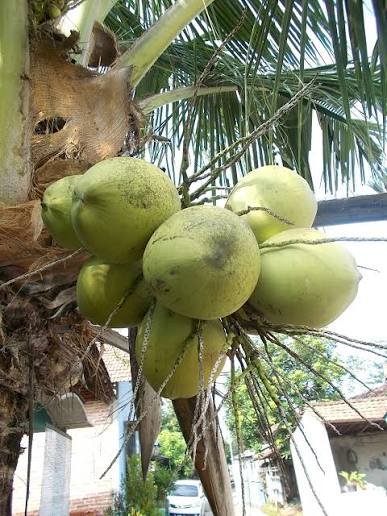
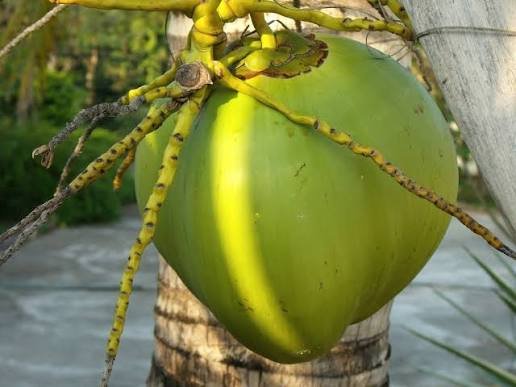
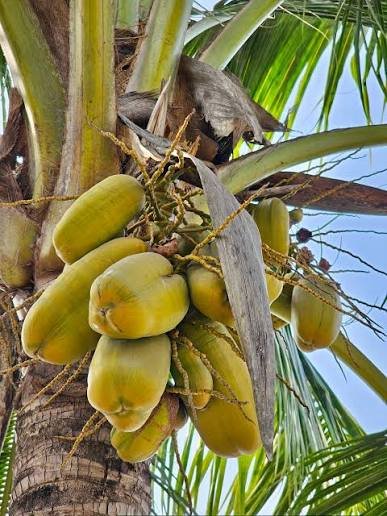
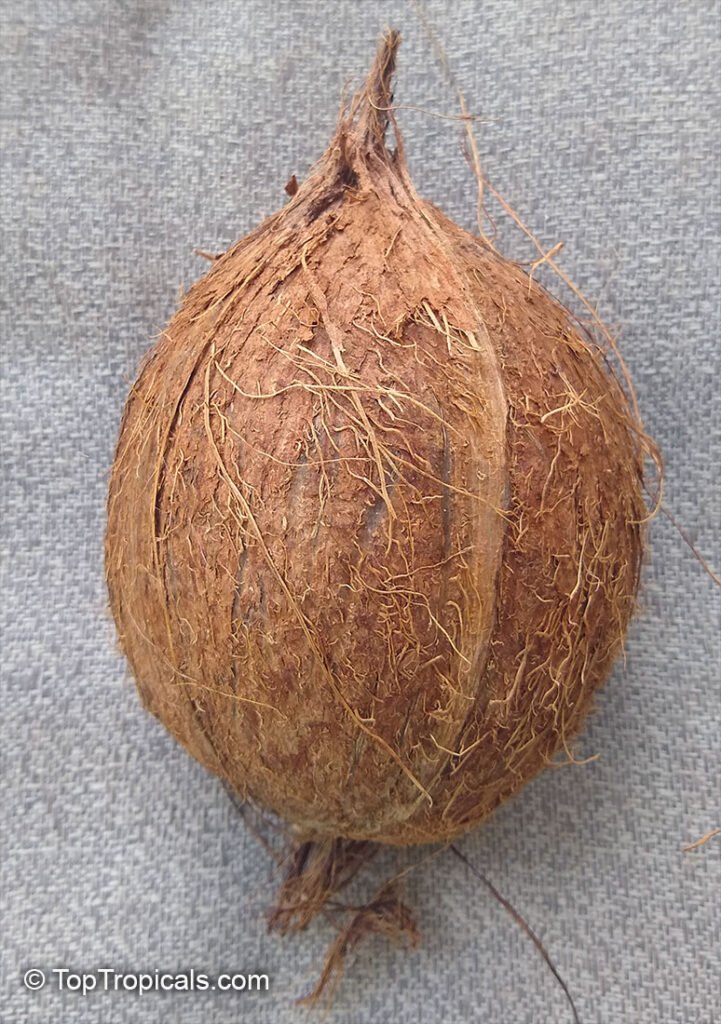
- The fruit is large, generally about 20–30 cm long, ovoid to somewhat triangular or elongated in shape. It is green or yellowish-green when immature and gradually becomes brown on maturity. The outer fruit consists of a smooth outer skin, a thick fibrous husk and a hard inner shell.
🌼 Flowers
- Coconut produces numerous small flowers in branched inflorescences that arise among the leaves. The flowers are generally yellowish, cream or orange-yellow in colour. Both male and female flowers occur on the same plant, making coconut a monoecious palm. The male flowers are more numerous and smaller, whereas the female flowers are larger and occur near the base of the branches of the inflorescence.
🥥 Seed, Kernel and Coconut Water
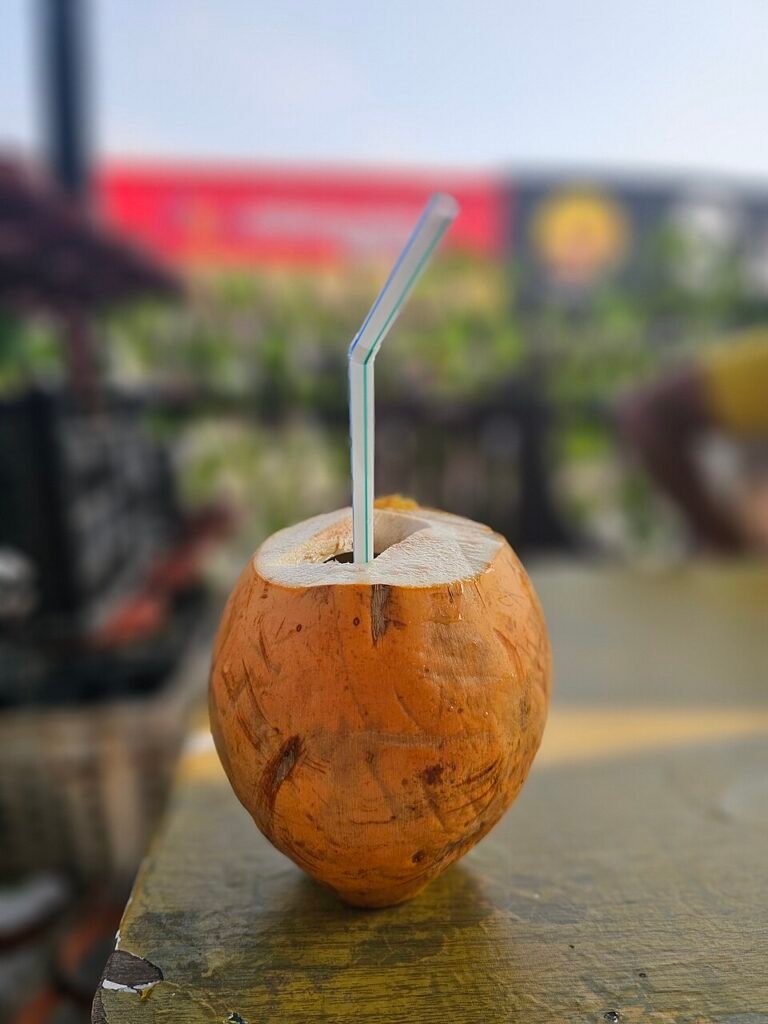
- Inside the hard shell is the white edible kernel (coconut meat), which is surrounded by a thin brown seed coat. In the immature fruit, the cavity contains a considerable amount of clear, sweet coconut water. As the fruit matures, the coconut water gradually decreases while the white kernel becomes thicker, harder and richer in oil.
🌱 Flowering and Fruiting
- Coconut can flower and produce fruits throughout the year under suitable tropical climatic conditions. A mature palm may bear several inflorescences and developing fruits at different stages simultaneously, which allows coconut production to continue almost year-round.
Nutritional Value of Coconut
| Nutrient | Amount per 100 g |
|---|---|
| Energy | 354 kcal |
| Carbohydrates | 15.23 g |
| Protein | 3.33 g |
| Total Fat | 33.49 g |
| Dietary Fiber | 9.0 g |
| Sugars | 6.23 g |
| Calcium | 14 mg |
| Iron | 2.43 mg |
| Magnesium | 32 mg |
| Phosphorus | 113 mg |
| Potassium | 356 mg |
| Sodium | 20 mg |
| Zinc | 1.10 mg |
| Vitamin C | 3.3 mg |
| Thiamin (Vitamin B1) | 0.066 mg |
| Riboflavin (Vitamin B2) | 0.020 mg |
| Niacin (Vitamin B3) | 0.540 mg |
| Vitamin B6 | 0.054 mg |
| Folate (Vitamin B9) | 26 µg |
Chemical Composition of Coconut
Coconut (Cocos nucifera) contains a variety of fatty acids, glycerides, amino acids, minerals, carbohydrates, proteins, and other bioactive constituents. The composition varies depending on the plant part, particularly the coconut oil, fresh kernel, and coconut water.
Plant Part Major Chemical Constituents 🥥 Coconut Oil Lauric acid, Myristic acid, Capric acid, Caprylic acid, Palmitic acid, Oleic acid, Stearic acid and various triglycerides 🌴 Coconut Kernel Proteins, fats, carbohydrates, dietary fiber, sugars, minerals and amino acids 💧 Coconut Water Sugars, proteins, amino acids, minerals, electrolytes and organic compounds 🧂 Minerals Potassium, calcium, phosphorus, magnesium, sodium, iron, copper, sulfur and chloride 🧬 Amino Acids Arginine, alanine, cysteine, serine, lysine, tyrosine, tryptophan, proline and leucine 🔬 Glycerides Mainly triglycerides containing medium-chain fatty acids, particularly lauric acid Important constituents of coconut oil: Lauric acid is the predominant fatty acid, along with myristic, caprylic and capric acids. Coconut oil mainly consists of triacylglycerols (triglycerides) rather than individual glycerides such as those named in the older description.
Ayurvedic Properties of Coconut
Coconut (Cocos nucifera) is traditionally described in Ayurveda as sweet, cooling, nourishing, heavy and unctuous in nature. It is considered beneficial for balancing Vata and Pitta and is traditionally used for nourishment, strength, digestion, urinary health and hair care.
Property Description Taste Sweet Nature Cooling, nourishing, heavy and unctuous Dosha Effect Helps balance Vata and Pitta Main Actions Nourishing, strengthening, rejuvenating, diuretic and hair-supportive Traditional Uses Supports digestion, urinary function, strength, hydration and overall nourishment Coconut Water Cooling, refreshing and traditionally considered diuretic Coconut Oil Nourishing, hair-supportive and traditionally Vata-Pitta balancing
Cultivation & Growing of Coconut
Coconut (Cocos nucifera) grows best in warm, humid tropical climates with plenty of sunlight and well-drained soil. It is widely cultivated in coastal and tropical regions for its fruit, oil, water, fiber and other useful products.
Growing Requirement Ideal Condition 🌡️ Climate Warm, humid tropical climate ☀️ Sunlight Full sunlight 🌱 Soil Deep, fertile and well-drained soil 💧 Water Regular and adequate moisture 🌴 Propagation Mainly grown from mature coconut seeds 📏 Spacing About 7–8 m between palms 🌼 Flowering Usually begins around 5–7 years after planting 🥥 Harvesting Mature coconuts are generally harvested after 11–12 months Coconut palms are sensitive to frost and prolonged waterlogging. Good drainage, adequate irrigation and regular nutrient management help maintain healthy growth and fruit production.
scientific research of Coconut
👨⚕️ Human Studies
1. Coconut Water & Ulcerative Colitis — Saurabh Kedia et al. (2024)
A double-blind, placebo-controlled clinical trial involving 95 patients with mild-to-moderate ulcerative colitis found that coconut water used alongside standard treatment produced significantly higher clinical response and remission rates than placebo. Changes in gut microbiota were also observed.2. Virgin Coconut Oil & Metabolic Health — Elahe Mansouri et al. (2024)
A randomized clinical trial studied virgin coconut oil consumption in adults with metabolic syndrome and evaluated brain-derived neurotrophic factor (BDNF) and oxidative-stress biomarkers, adding clinical evidence to research on the metabolic and antioxidant effects of coconut oil.3. Virgin Coconut Oil & COVID-19 — Imelda Angeles-Agdeppa et al. (2024)
A randomized trial involving 76 adults with confirmed COVID-19 investigated virgin coconut oil as an adjunct treatment. The VCO group showed earlier symptom relief and normalization of C-reactive protein, although these findings do not establish coconut oil as a treatment for COVID-19.
🐀 Animal Studies
1. Anti-inflammatory Effects — S. Intahphuak, P. Khonsung & A. Panthong (2010)
Experimental studies in rats found that virgin coconut oil demonstrated moderate anti-inflammatory, analgesic and antipyretic effects in several laboratory models.2. Safety Study — Researchers from Universiti Sains Malaysia and collaborators (2016)
Chronic and sub-chronic toxicity studies of fermented virgin coconut oil in rats found no major treatment-related abnormalities in body weight, blood parameters, biochemical markers or tissue examination at the tested doses.3. Long-term Coconut Oil Consumption — Sunday A. Bisong et al. (2020)
A mouse study found that long-term diets containing 5% or 20% virgin coconut oil were associated with impaired performance in some spatial-memory measures. This highlights why animal findings should not automatically be interpreted as human health effects.
🧪 Overall Scientific Evidence
- Current research suggests that coconut water and virgin coconut oil have potential biological effects, particularly in areas such as inflammation, gut health and oxidative stress. However, evidence remains condition-specific, and coconut products should not be considered proven treatments for diseases without stronger clinical evidence. A systematic review and meta-analysis of intervention studies also found that the overall evidence for health benefits of coconut oil remains mixed.
Medicinal Uses of Coconut
🧠 Head & Neurological Uses
- Headache: Coconut water is traditionally used for certain types of headache.
- Headache Formula: 100 ml coconut milk may be prepared with Myrica powder, ghee, sugar candy, almonds and saffron.
- Hair Loss: Coconut oil is traditionally applied to the scalp for hair and scalp care.
- Migraine: Coconut water has traditionally been used as a nasal application in migraine.
❤️ Heart & Digestive Uses
- Digestive Discomfort: Coconut preparations have traditionally been used for nausea, vomiting, acidity and digestive discomfort.
- Diarrhea: Coconut water is traditionally consumed for diarrhea and digestive weakness.
- Hiccups: Traditionally, coconut fiber ash has been used in a specific preparation for hiccups.
- Heart Discomfort: Coconut water preparations have traditionally been used for thirst, dizziness and certain heat-related symptoms.
🧴 Skin & Wound Care
- Wounds: Coconut oil has traditionally been applied externally to support wound care.
- Skin Care: Tender coconut water has traditionally been used for facial cleansing and skin care.
- Rashes: Coconut water has been traditionally used externally in certain skin conditions.
- Ringworm: Specially prepared coconut oil has traditionally been applied to affected skin.
- Bruises & Sprains: Finely ground mature coconut kernel combined with turmeric has traditionally been used as a topical preparation.
👄 Oral & Throat Uses
- Throat Sores: A decoction prepared from coconut root has traditionally been used as a gargle.
- Thirst: Tender coconut water is traditionally used for relieving thirst.
💧 Urinary & Kidney Uses
- Difficult Urination: Tender coconut water and other coconut preparations have traditionally been used to support urinary function.
- Kidney Inflammation: Tender coconut water has traditionally been used in traditional medicine for urinary and kidney-related complaints.
- Diabetes-Related Thirst: Tender coconut water has traditionally been used to relieve excessive thirst associated with diabetes.
🌸 Reproductive Health
- Postpartum Discomfort: Coconut kernel has traditionally been used as a nourishing food after childbirth.
- Traditional Pregnancy Preparations: Certain coconut-flower formulations are described in classical Ayurvedic practice. Such preparations should only be used under qualified medical supervision.
🌡️ General Traditional Uses
- Fever: Coconut kernel preparations have traditionally been used in certain chronic fever preparations.
- Swelling: Coconut-flower-based oil preparations have traditionally been used externally for swelling.
- Coconut Water: Tender coconut water has traditionally been used for hydration, thirst and general nourishment.
💊 Traditional Dosage
Preparation Traditional Dose 🥥 Coconut Water 10–20 ml 🌿 Powder 1–2 g 👨⚕️ Other preparations As directed by a qualified practitioner Note: The medicinal uses described above are based on traditional Ayurvedic practice and should not be considered a substitute for professional medical treatment. Dosage and suitability may vary depending on the preparation and individual condition.
Frequently Asked Questions (FAQs)
1. What are the health benefits of coconut?
2. Is coconut water good for hydration?
- Coconut provides dietary fiber, minerals, healthy nutrients and natural fats. Fresh coconut meat can be part of a balanced diet, while coconut water provides fluids and electrolytes such as potassium. However, the benefits vary depending on whether you consume coconut meat, water, milk or oil.
- Yes. Coconut water contains water and naturally occurring electrolytes, especially potassium, sodium and magnesium. It can be a useful drink after light to moderate physical activity or mild fluid loss, although plain water remains an excellent choice for everyday hydration.
3. Is coconut good for weight loss?
4. Is coconut oil good for hair and skin?
- Coconut is nutrient-dense but relatively high in calories and fat, so portion size matters. Coconut oil should not be considered a weight-loss treatment, and strong evidence does not show that simply eating coconut causes significant weight loss.
- Coconut oil is widely used in hair and skin care. When applied topically, it can help reduce moisture loss and may be useful for dry skin. It is also commonly used in hair oils and cosmetic products.
5. Is coconut oil healthy to eat every day?
6. What nutrients are found in coconut?
- Coconut oil can be used as part of a balanced diet, but it is high in saturated fat. Large amounts are therefore not generally recommended, particularly for people concerned about heart health.
- Fresh coconut meat contains dietary fiber, fat, carbohydrates, protein and minerals such as manganese, copper, magnesium, phosphorus and potassium. Coconut water has a different nutritional profile and is particularly known for its water and electrolyte content.
7. What is the difference between coconut water and coconut milk?
8. Can coconut water be consumed every day?
- Coconut water is the naturally occurring liquid inside a young coconut. Coconut milk is produced by processing grated coconut flesh with water. They therefore have very different nutritional compositions and should not be considered the same product.
- For most healthy people, moderate amounts of unsweetened coconut water can be included in the diet. However, people with kidney disease, high potassium levels or certain fluid restrictions should consult a healthcare professional before consuming it regularly.
9. What are the uses of coconut?
10. Is coconut safe for everyone?
- Coconut is used as food, a beverage and an ingredient in cooking and cosmetics. Coconut flesh, milk, water and oil are widely consumed, while the husk, shell, leaves and fibers are also used to make ropes, mats, household products, fuel and other materials.
- Coconut is generally suitable for many people when consumed in normal food amounts. However, coconut and coconut-derived products can cause allergic reactions in some individuals. People with kidney problems, high potassium levels, specific heart conditions or other medical concerns should seek individualized medical advice.
Back To Home

Ayuage is a trusted platform dedicated to sharing practical, easy-to-understand, and reliable insights on health, nutrition, wellness, and healthy living. Our goal is to simplify important health topics and provide readers with helpful information that supports smarter food choices and a balanced lifestyle.