All About Beetroot ( Beet root ) : 15 Powerful Health Benefits, Uses, Nutrition & Medicinal Properties
Introduction
- Beetroot (Beta vulgaris) is a nutritious, versatile, and valuable root vegetable cultivated and consumed across many parts of the world. It is believed to have originated in the Mediterranean region, while its cultivation has gradually spread to different temperate and subtropical regions. Today, beetroot is widely grown in countries such as India, the United States, Russia, France, Germany, Poland, the United Kingdom, China, and Australia.
- In India, beetroot is cultivated in several states, particularly in regions with suitable cool and moderate climatic conditions. The fleshy, vibrant red to deep-purple root is commonly used as a vegetable, fresh salad, juice, and food ingredient. In some regions, the young leaves are also consumed as a leafy vegetable.
- Beetroot is highly appreciated for its rich nutritional profile, containing dietary fiber, folate, naturally occurring nitrates, vitamins, minerals, and distinctive pigments known as betalains. These naturally occurring compounds have made beetroot an intriguing and extensively studied food plant, particularly for its antioxidant properties and potential role in supporting overall health.
- With its striking color, refreshing taste, nutritional richness, and diverse culinary applications, beetroot has earned a prominent place in traditional diets as well as modern health-conscious nutrition.
Discovery of Beetroot ( Beet root )
- Beetroot (Beta vulgaris) has been cultivated and used as a food plant for centuries, but its modern scientific importance increased considerably as researchers began investigating its naturally occurring nitrates, betalains, antioxidants, and other bioactive compounds.
Early Scientific Interest
- The scientific study of beetroot gradually expanded from its nutritional and agricultural importance to its potential physiological effects. Researchers became particularly interested in the high concentration of dietary nitrate (NO₃⁻) found in beetroot. Scientists discovered that dietary nitrate can participate in the nitrate–nitrite–nitric oxide pathway, which is associated with blood-vessel function and cardiovascular physiology.
Research on Beetroot and Blood Pressure
- One of the important areas of beetroot research has been its potential effect on blood pressure. Mario Siervo and colleagues published a systematic review and meta-analysis in 2013 examining inorganic nitrate and beetroot juice supplementation. Their analysis found that nitrate-rich beetroot interventions could reduce blood pressure in adults.
- Further research continued to investigate this relationship. A 2018 systematic review by Diego A. Bonilla Ocampo and colleagues evaluated randomized controlled trials involving beetroot juice and blood pressure. The researchers reported evidence suggesting that beetroot-derived nitrate may help reduce blood pressure through the nitrate–nitrite–nitric oxide pathway.
- A later systematic review and meta-analysis published in 2022 included 7 studies involving 218 participants with arterial hypertension. Beetroot juice containing nitrate was associated with an average reduction of approximately 4.95 mmHg in systolic blood pressure, although no significant reduction was found for diastolic blood pressure.
- More recently, a 2024 systematic review and meta-analysis of 11 randomized controlled trials involving 349 people with hypertension found that beetroot juice was associated with a reduction in clinical systolic blood pressure of approximately 5.31 mmHg. However, the authors rated the certainty of evidence as low and emphasized that the findings should be interpreted cautiously.
Research on Exercise Performance
- Beetroot juice has also attracted considerable scientific interest in sports nutrition because of its nitrate content. A systematic review and meta-analysis by researchers including Andrew M. Jones and colleagues examined dietary nitrate supplementation and endurance exercise performance. Across 47 studies and 76 trials, researchers investigated whether nitrate supplementation could improve exercise performance.
- Another large systematic review and meta-analysis published in 2022 included 123 studies and 1,705 participants. It found that inorganic nitrate supplementation, particularly from beetroot juice or high-nitrate foods, could produce a small improvement in exercise performance, with the strongest effects observed for exercise lasting approximately 2–10 minutes.
Research on Beetroot’s Betalains
- Scientists have also investigated betalains, the natural pigments responsible for much of beetroot’s characteristic red-purple coloration. A 2020 review by Elham Hadipour, Akram Taleghani, Nilufar Tayarani-Najaran, and Zahra Tayarani-Najaran examined the biological effects of red beetroot and betalains. The review discussed antioxidant and anti-inflammatory activity as well as potential cardiovascular, metabolic, and other biological effects. However, many of these findings come from laboratory and animal research, so they should not automatically be interpreted as proven treatments for human diseases.
- A 2021 review by Iñaki Milton-Laskibar and colleagues further examined beetroot’s major bioactive compounds, particularly nitrate and betalains, and their potential roles in cardiovascular and other health-related processes.
Current Scientific Perspective
- Modern research increasingly considers beetroot a functional food because it contains several biologically active compounds rather than a single medicinal constituent. Current evidence is particularly interesting for dietary nitrate, blood-pressure regulation, vascular function, and exercise performance, while research into betalains and other compounds continues.
- Importantly, beetroot should be regarded primarily as a nutritious food, not as a replacement for prescribed medical treatment. Although several systematic reviews and meta-analyses have reported promising findings, the strength of evidence varies according to the health outcome, study design, dose, and population studied.
Powerful History of Beetroot ( Beet root )
- Beetroot (Beta vulgaris) has a remarkable and fascinating history that stretches back thousands of years. The plant belongs to the Amaranthaceae family and is believed to have originated from the wild sea beet (Beta vulgaris subsp. maritima), a plant native to coastal regions of the Mediterranean and Atlantic areas of Europe, North Africa, and Western Asia.
- Ancient civilizations initially valued beet plants mainly for their nutritious leaves, while the roots of early forms were much thinner and different from the familiar rounded beetroot cultivated today. Historical evidence indicates that beet plants were known and cultivated in the ancient Mediterranean world, where they gradually became an important food plant.
- During the Roman period, beet was cultivated more widely and different forms were developed for food. The Romans are believed to have consumed both the leaves and roots, helping the plant gain greater importance as a cultivated vegetable. Over subsequent centuries, selective cultivation gradually produced beet varieties with larger, more colorful, and more desirable roots.
- By the Middle Ages, beet cultivation had spread across different parts of Europe. Farmers increasingly selected plants with larger roots, contributing to the development of varieties that eventually led to the modern beetroot. By the 16th and 17th centuries, red-rooted beet varieties had become increasingly familiar in European agriculture and cuisine.
- Beetroot later spread beyond Europe and became established in many regions with suitable climates. Today, it is cultivated extensively in Europe, Asia, North America, South America, Australia, and other temperate and subtropical regions. Countries such as India, China, the United States, Russia, France, Germany, Poland, and the United Kingdom are among the important areas associated with beet cultivation.
- Over time, beetroot transformed from an ancient cultivated plant into a versatile and highly valued food crop. Its vibrant color, distinctive flavor, nutritional richness, and diverse culinary applications have helped it maintain a powerful presence in traditional cuisine and modern nutrition.
Beetroot ( Beet root ) in your language
| Name / Term | Language / Country | Local Name |
|---|---|---|
| Beetroot in English | 🌍 Worldwide | Beetroot / Beet / Garden Beet |
| Beetroot in Hindi | 🇮🇳 India | चुकंदर (Chukandar) |
| Beetroot in Sanskrit | 🇮🇳 India | रक्तगृञ्जन (Raktagrinjana), पालंकी (Palanki) |
| Beetroot in Urdu | 🇮🇳 India / 🇵🇰 Pakistan | چقندر (Chuqandar / Chakundar) |
| Beetroot in Bengali | 🇮🇳 India / 🇧🇩 Bangladesh | বিটপলং (Bitpalang), পালক (Palak) |
| Beetroot in Assamese | 🇮🇳 India | বিট (Bit) |
| Beetroot in Gujarati | 🇮🇳 India | બીટ (Bit) |
| Beetroot in Marathi | 🇮🇳 India | बीट (Bit) |
| Beetroot in Kannada | 🇮🇳 India | ಬೀಟ್ರೂಟ್ (Beetroot), ರಕ್ತಗಡ್ಡೆ (Raktagadde) |
| Beetroot in Tamil | 🇮🇳 India / 🇱🇰 Sri Lanka | சென்சீரை (Cencirai / Sensirai) |
| Beetroot in Telugu | 🇮🇳 India | బీట్రూట్ (Beetroot) |
| Beetroot in Malayalam | 🇮🇳 India | ബീറ്റ്റൂട്ട് (Beetroot), ചെങ്കീര (Chencheera) |
| Beetroot in Odia | 🇮🇳 India | ବିଟ୍ (Bit) |
| Beetroot in Nepali | 🇳🇵 Nepal | चुकन्दर (Cukandar), गुलियो मूला (Guliyo Mula) |
| Beetroot in Arabic | 🌍 Arab Countries | بنجر (Banjr), شمندر (Shamandar) |
| Beetroot in Persian | 🇮🇷 Iran | چغندر (Choghondar) |
| Beetroot in Chinese | 🇨🇳 China | 甜菜 (Tiáncài), 红甜菜 (Hóng Tiáncài) |
| Beetroot in Japanese | 🇯🇵 Japan | ビーツ (Bītsu) |
| Beetroot in Korean | 🇰🇷 South Korea | 비트 (Biteu) |
| Beetroot in Thai | 🇹🇭 Thailand | บีทรูท (Beetroot) |
| Beetroot in Vietnamese | 🇻🇳 Vietnam | Củ dền |
| Beetroot in Indonesian | 🇮🇩 Indonesia | Bit / Buah Bit |
| Beetroot in Malay | 🇲🇾 Malaysia | Ubi Bit |
| Beetroot in Russian | 🇷🇺 Russia | Свёкла (Svyokla) |
| Beetroot in Ukrainian | 🇺🇦 Ukraine | Буряк (Buriak) |
| Beetroot in German | 🇩🇪 Germany | Rote Bete / Rote Beete |
| Beetroot in French | 🇫🇷 France | Betterave rouge |
| Beetroot in Spanish | 🇪🇸 Spain / 🌎 Latin America | Remolacha / Betabel |
| Beetroot in Portuguese | 🇵🇹 Portugal / 🇧🇷 Brazil | Beterraba |
| Beetroot in Italian | 🇮🇹 Italy | Barbabietola rossa |
| Beetroot in Dutch | 🇳🇱 Netherlands | Biet |
| Beetroot in Polish | 🇵🇱 Poland | Burak ćwikłowy |
| Beetroot in Czech | 🇨🇿 Czech Republic | Řepa obecná |
| Beetroot in Greek | 🇬🇷 Greece | Παντζάρι (Pantzári) |
| Beetroot in Swedish | 🇸🇪 Sweden | Rödbeta |
| Beetroot in Danish | 🇩🇰 Denmark | Rødbede |
| Beetroot in Finnish | 🇫🇮 Finland | Punajuuri |
| Beetroot in Norwegian | 🇳🇴 Norway | Rødbete |
| Beetroot in Romanian | 🇷🇴 Romania | Sfeclă roșie |
| Beetroot in Hungarian | 🇭🇺 Hungary | Cékla |
| Beetroot in Turkish | 🇹🇷 Türkiye | Pancar |
| Beetroot in Bulgarian | 🇧🇬 Bulgaria | Червено цвекло |
| Beetroot in Serbian | 🇷🇸 Serbia | Цвекла (Cvekla) |
| Beetroot in Croatian | 🇭🇷 Croatia | Cikla |
| Beetroot in Slovenian | 🇸🇮 Slovenia | Pesa |
| Beetroot in Albanian | 🇦🇱 Albania | Panxhar |
| Beetroot in Georgian | 🇬🇪 Georgia | ჭარხალი (Charkhali) |
| Beetroot in Hebrew | 🇮🇱 Israel | סלק (Seleq) |
| Beetroot in Afrikaans | 🇿🇦 South Africa | Beet |
| Beetroot in Amharic | 🇪🇹 Ethiopia | ቀይ ስር (Qey Sir) |
| Beetroot in Swahili | 🇰🇪 Kenya / 🇹🇿 Tanzania | Beetroot |
| Beetroot in Māori | 🇳🇿 New Zealand | Pīti |
| Beetroot in Australian English | 🇦🇺 Australia | Beetroot |
| Beetroot in American English | 🇺🇸 USA | Beet |
| Beetroot in Canadian English | 🇨🇦 Canada | Beet / Beetroot |
| Beetroot in Mexican Spanish | 🇲🇽 Mexico | Betabel |
| Beetroot in Argentine Spanish | 🇦🇷 Argentina | Remolacha |
| Beetroot in Chilean Spanish | 🇨🇱 Chile | Betarraga |
| Beetroot in Colombian Spanish | 🇨🇴 Colombia | Remolacha |
| Beetroot in Peruvian Spanish | 🇵🇪 Peru | Betarraga / Remolacha |
| Name/Term | Information |
|---|---|
| Botanical Name | Beta vulgaris L. |
| Hindi Name | चुकंदर (Chukandar) |
| English Names | Beetroot, Beet, Garden Beet, Table Beet, Red Beet |
| Family – Current Classification | Amaranthaceae |
| Family – Older Classification | Chenopodiaceae |
| Synonym | Beta alba DC. |
| Plant Type | Biennial herb |
| Edible Parts | Root and leaves |
| Major Cultivar Groups | Beetroot/Garden Beet, Sugar Beet, Leaf Beet, Fodder Beet |
Physical Appearance of Beetroot ( Beet root )
🌱 Plant
Beetroot is a 30–90 cm tall, annual herbaceous plant with a fleshy and tuberous growth habit. The plant is hairless and develops a dense leafy structure. Its most distinctive feature is the swollen, fleshy underground root, which is commonly cultivated and consumed as a vegetable.
🌿 Stem
The stem is generally erect, fleshy and grooved. It is relatively compact and bears the leaves alternately. As the plant matures, the stem develops flowering structures that arise above the foliage.
🍃 Leaves
The leaves are simple and alternate in arrangement. The basal leaves are generally oval to oblong and arise close to the swollen root, while the stem leaves are comparatively smaller and quadrangular-ovate. The leaves are green, somewhat fleshy and resemble those of radish or turnip.
🫚 Root
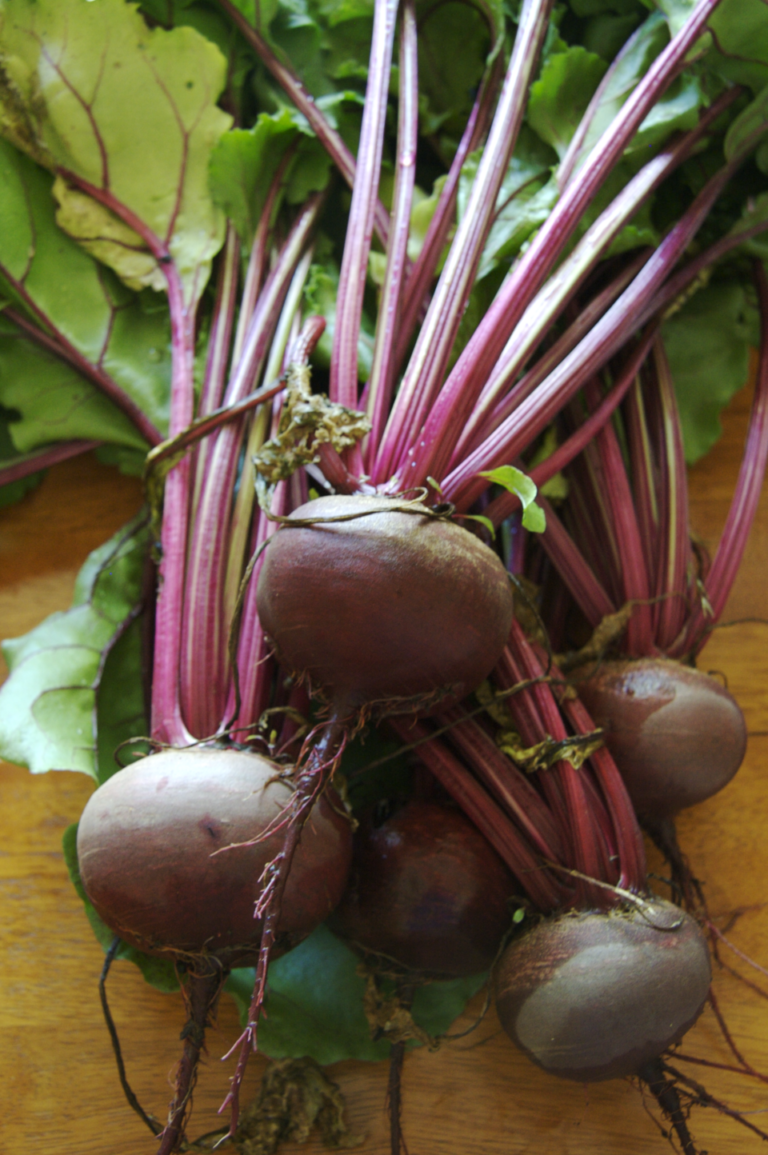
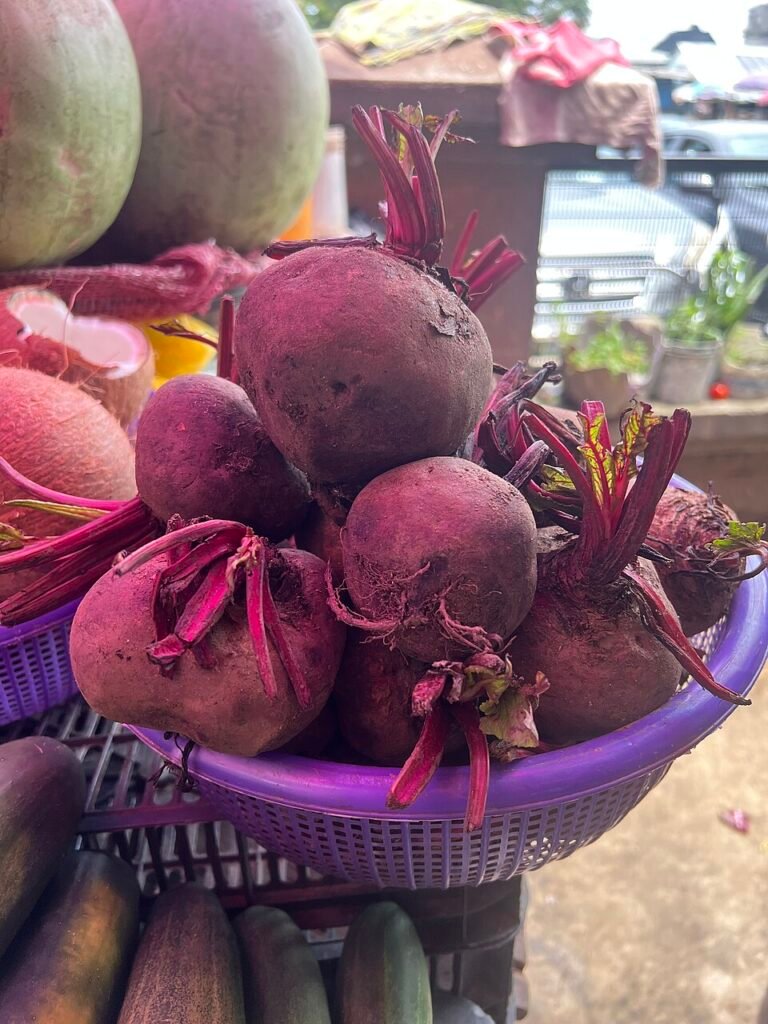
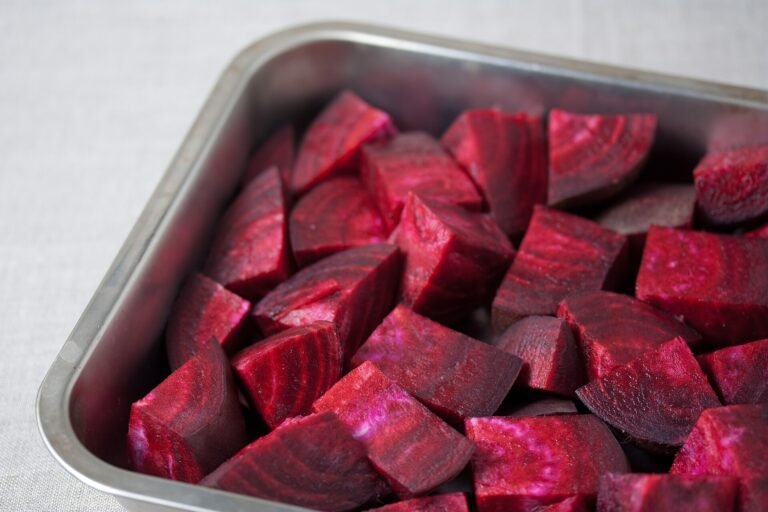
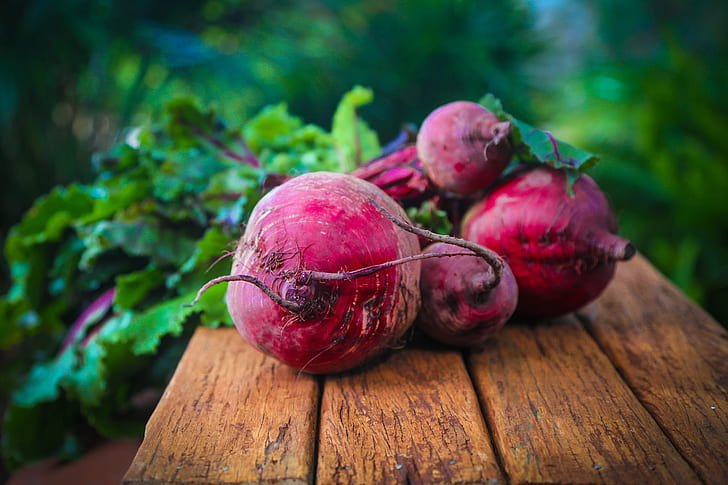
The root is the most prominent and characteristic part of the Beetroot plant. It is fleshy, swollen, tuberous and generally rounded or turnip-shaped. The outer surface is usually deep red to reddish-purple, while the inner flesh is also red or deep reddish-purple.
🌸 Inflorescence
The flowers are arranged on long, cylindrical spikes. They may occur singly or in small clusters of 2–3 flowers. The flowering structures develop above the foliage and become more prominent during the reproductive stage.
🌼 Flowers
The flowers are small and inconspicuous and are produced either singly or in clusters of 2–3. They are borne along the elongated cylindrical spikes. The flowers appear during the flowering season as the plant reaches maturity.
🌰 Fruit
After flowering, the plant produces small fruits that develop from the flowers. The fruits are associated with the clustered floral structures and mature during the fruiting stage.
🌱 Seeds
The seeds are produced within the mature fruiting structures. They are relatively small and are responsible for the propagation of the plant. Mature seeds can be collected and used for growing new Beetroot plants.
📅 Flowering & Fruiting
The flowering and fruiting period generally extends from September to February. The exact timing may vary depending on the geographical region and environmental conditions.
🎨 Overall Appearance
Overall, Beetroot can be recognized by its green leafy foliage, fleshy grooved stem and prominently swollen red to purple-red underground root. The striking colour of the root makes it one of the most easily recognizable cultivated root vegetables.
Chemical Composition of Beetroot ( Beet root )
- The root of Beetroot (Beta vulgaris) contains various nutritional and bioactive constituents, including proteins, sugars, starch, vitamins A, B and C, phytoalexins, methylene dioxy flavanones, calcium, iron, and phosphorus. It is also a rich source of naturally occurring betalain pigments, particularly betacyanins and betaxanthins, which contribute to its characteristic red or purple colour and antioxidant activity. Other important phytochemicals present in beetroot include nitrates, betaine, polyphenols, flavonoids, and organic acids, which contribute to its nutritional and biological properties.
Ayurvedic Properties of Beetroot ( Beet root )
- In Ayurveda, beetroot is traditionally regarded as beneficial for the eyes and is described as having properties that help in managing excess body fat and intestinal worms. It possesses sharp and astringent qualities and is considered supportive in conditions associated with aggravated Pitta and hemorrhoids. Red beetroot is particularly valued for its nourishing nature and is traditionally associated with supporting healthy menstrual flow. White beetroot is considered milder in action and is known for its diuretic properties.
- The root is described as sweet, cooling and heavy, with nourishing and strength-promoting effects. It is traditionally used to support the body in conditions associated with weakness, anemia and certain mental or psychological disturbances. The leaves are considered diuretic and mildly laxative and are traditionally used for reducing swelling and for relieving complaints such as headache, paralysis and earache.
- The seeds are traditionally regarded as expectorant, diuretic and वातानुलोमक (supporting the normal movement of Vata). They are also associated with promoting sexual vitality and menstrual function and have traditionally been used in conditions such as amenorrhea and painful menstruation. Beetroot root has also been reported to possess tumor-inhibitory potential, while betaine, an alkaloid-like compound obtained from beetroot, has been associated with diuretic and menstrual-supportive effects. Beetroot also exhibits antioxidant activity, and experimental studies on its ethanolic root extract have demonstrated hepatoprotective activity, indicating a protective effect on the liver.
Medicinal Uses of Beetroot ( Beet root )
🧠 Head Disorders
1. Migraine (Adhasisi):
Instilling 1–2 drops of fresh beetroot root juice into the nostrils is traditionally used to provide relief from migraine-related headache.
2. Baldness of the Scalp:
Applying fresh beetroot leaf juice regularly to the scalp for several days is traditionally used for managing baldness. Alternatively, beetroot leaves may be ground together with turmeric and applied to the scalp.
3. Dandruff:
Washing the scalp with a decoction prepared from beetroot tubers is traditionally used to help remove dandruff and head lice.
👁️ Eye Disorders
1. Ophthalmia / Eye Inflammation (Netraabhishyanda):
Massaging beetroot tuber juice over the temples is traditionally used for relief in conditions associated with eye inflammation.
.
🦷 Oral Disorders
1. Mouth Ulcers / Toothache:
A decoction prepared from beetroot leaves may be used as a gargle and is traditionally used to relieve toothache and mouth ulcers.
🫁 Chest & Respiratory Disorders
1. Cough (Kasa):
The root and seeds of beetroot are traditionally used in the management of cough, breathing difficulty, and asthma-related complaints.
👂 Ear Disorders
1. Earache:
Warming beetroot leaf juice slightly and instilling 2–2 drops into the ear is traditionally used to help relieve ear inflammation and pain.
🫃 Abdominal Disorders
1. Abdominal Disorders:
Consumption of 1–2 g of beetroot seed powder is traditionally used to provide relief from flatulence (abdominal bloating) and constipation.
🩸 Anorectal Disorders
1. Hemorrhoids (Arsha):
Taking beetroot root powder with ghee for 21 days is traditionally used in the management of hemorrhoids.
2. Constipation & Bleeding Hemorrhoids:
A beetroot decoction may be prepared and 10–30 ml may be taken in the morning, 1 hour before food, and at night before going to sleep. It is traditionally used for constipation and bleeding hemorrhoids.
🦴 Musculoskeletal Disorders
1. Sprain:
Fresh beetroot leaves may be crushed and applied directly over the affected area. This traditional application is used to help reduce pain and swelling associated with sprains.
🧴 Skin Disorders
1. Wounds (Vrana):
Crushed beetroot leaves may be applied over wounds and are traditionally used to support wound cleansing and healing.
2. Burns:
A decoction prepared from beetroot leaves may be cooled and poured over a burn wound as a traditional supportive application.
3. Hyperpigmentation & Freckles:
Beetroot leaf juice mixed with honey may be applied to the face and is traditionally used for managing facial pigmentation and freckles
🧠 Mental & Neurological Disorders
1. Epilepsy (Mirgi):
Instilling 1–2 drops of beetroot leaf juice into the nostrils is traditionally described for use in epilepsy.
2. Apasmara:
Nasal administration (Nasya) of beetroot tuber juice is traditionally described for Apasmara, migraine, and other mental or neurological complaints.
💆 General Body Disorders
1. Pain:
Massage with beetroot oil is traditionally used to help relieve pain.
2. Swelling (Inflammation):
Beetroot leaf juice mixed with honey may be applied over swollen areas and is traditionally described as beneficial for reducing swelling.
Frequently Asked Questions (FAQs)
1. What are the health benefits of beetroot?
6. What are the side effects of eating beetroot?
- Beetroot is a nutrient-rich vegetable containing dietary nitrates, folate, potassium, fiber, betalains and other plant compounds. It may support cardiovascular health, blood flow, exercise performance and overall nutrition.
- Beetroot is generally well tolerated as a food, but some people may experience digestive discomfort. It can also temporarily turn urine or stool pink or red, a harmless effect commonly known as beeturia.
2. Does beetroot help lower blood pressure?
7. Can beetroot cause kidney stones?
- Yes, research suggests that nitrate-rich beetroot juice may modestly reduce systolic blood pressure in some people. Dietary nitrates can be converted into nitric oxide, which helps relax and widen blood vessels. However, beetroot should not replace prescribed treatment for hypertension.
- Beetroot contains oxalates, so people who are prone to calcium-oxalate kidney stones may need to limit their intake or discuss regular consumption with a healthcare professional.
3. Is beetroot good for anemia and hemoglobin?
8. Does beetroot help with constipation?
- Beetroot contains folate and iron, but it should not be considered a treatment for iron-deficiency anemia by itself. A balanced diet and appropriate medical treatment are important when anemia is confirmed.
- Whole beetroot contains dietary fiber, which can contribute to normal bowel function as part of a fiber-rich diet. Adequate water intake and overall dietary habits are also important for preventing constipation.
4. Is beetroot juice better than eating whole beetroot?
9. Why does urine turn red after eating beetroot?
- Both can provide beneficial nutrients, but they are not identical. Beetroot juice can provide a concentrated source of dietary nitrate, whereas whole beetroot also provides fiber. The better choice depends on the person’s nutritional needs and overall diet.
- Red or pink urine after eating beetroot can occur because of beetroot pigments. This is usually harmless and temporary. However, persistent blood-colored urine without a recent beetroot intake should be medically evaluated.
5. Can beetroot improve exercise performance?
10. Is beetroot good for the liver?
- Beetroot is commonly studied for exercise performance because its natural nitrates can increase nitric oxide availability and may support blood flow and exercise efficiency. The effects can vary depending on the individual, type of exercise and amount consumed.
- Beetroot contains betalains and other plant compounds with antioxidant properties, and experimental research has investigated possible liver-protective effects. However, beetroot should not be considered a proven treatment for liver disease and should not replace medical care.
11. Does beetroot increase blood and hemoglobin?
12. Is beetroot good for increasing hemoglobin levels?
- Beetroot is often considered a blood-building food because it provides folate, iron and other nutrients that support normal red blood cell formation. However, beetroot alone cannot treat anemia or significantly increase hemoglobin when there is an underlying iron deficiency. A balanced diet and appropriate treatment are important for people with diagnosed anemia.
- Beetroot can be included as part of a healthy diet to support overall blood health. Its folate and other nutrients contribute to normal blood formation, while its iron content can provide some nutritional support. However, if hemoglobin is low because of iron deficiency, beetroot should not be considered a substitute for an appropriate iron-rich diet or medical treatment.
Back To Home

Ayuage is a trusted platform dedicated to sharing practical, easy-to-understand, and reliable insights on health, nutrition, wellness, and healthy living. Our goal is to simplify important health topics and provide readers with helpful information that supports smarter food choices and a balanced lifestyle.